The internet is undergoing a quiet but massive shift. For the last decade, we’ve relied on a handful of tech giants to store our data, host our websites, and power our applications. But the "Coming DePIN Data Revolution" is changing the game, and at SkyMapper, we are proud to be leading this charge for the final frontier.
A recent wave of interest, highlighted by the Decentralized Storage Alliance, has put a spotlight on DePIN (Decentralized Physical Infrastructure Networks). This movement isn't just about crypto tokens; it’s about rebuilding the world’s critical infrastructure, from storage to wireless networks to sensors, on a foundation that is open, resilient, and community-owned.
Here is what this data revolution means for the world, and specifically, for the future of astronomy with SkyMapper.
The Problem with Centralization
Whether it’s cloud storage or astronomical data, centralization creates bottlenecks.
- Single Points of Failure: When a central server goes down, the lights go out.
- Data Silos: Valuable scientific data is often locked behind paywalls or within academic institutions, inaccessible to the public.
- Lack of Transparency: How do we verify the authenticity of data in an age of AI-generated content?
The DePIN movement solves these problems by distributing the workload. Instead of one giant data center, imagine thousands of nodes working together. Read more here about how SkyMapper’s decentralized network reinforces trustworthy, reliable science.
SkyMapper: The DePIN for the Cosmos
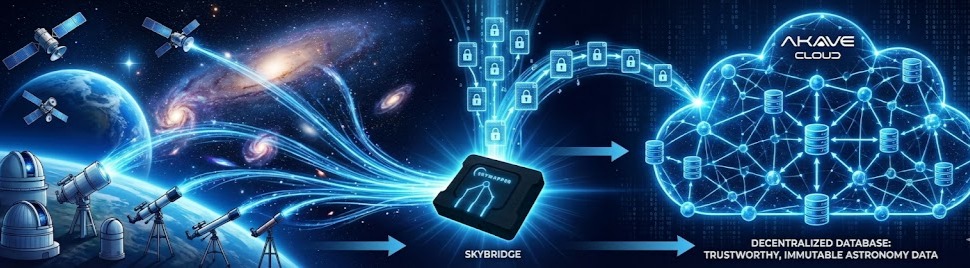
At SkyMapper, we are applying these exact principles to space. Just as decentralized storage networks use idle hard drives to store the world's files, SkyMapper uses a distributed network of telescopes to map the universe.
We are building the world’s first decentralized, real-time map of the sky. By connecting thousands of telescopes, from backyard hobbyists to professional observatories, we are creating a "living" database of the cosmos that no single entity could build alone.
Here is how SkyMapper embodies the core pillars of the DePIN data revolution:
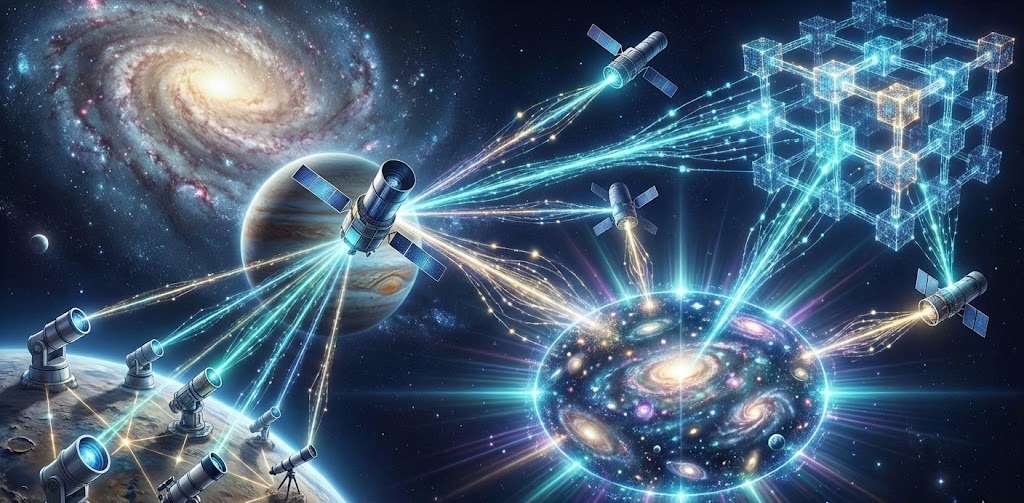
1. Immutable, Verified Data In a world of deepfakes, truth is the most valuable asset. SkyMapper uses blockchain technology to cryptographically verify every image captured by our network. This creates an immutable "Proof of Observation," ensuring that the data used for scientific discovery is authentic and tamper-proof.
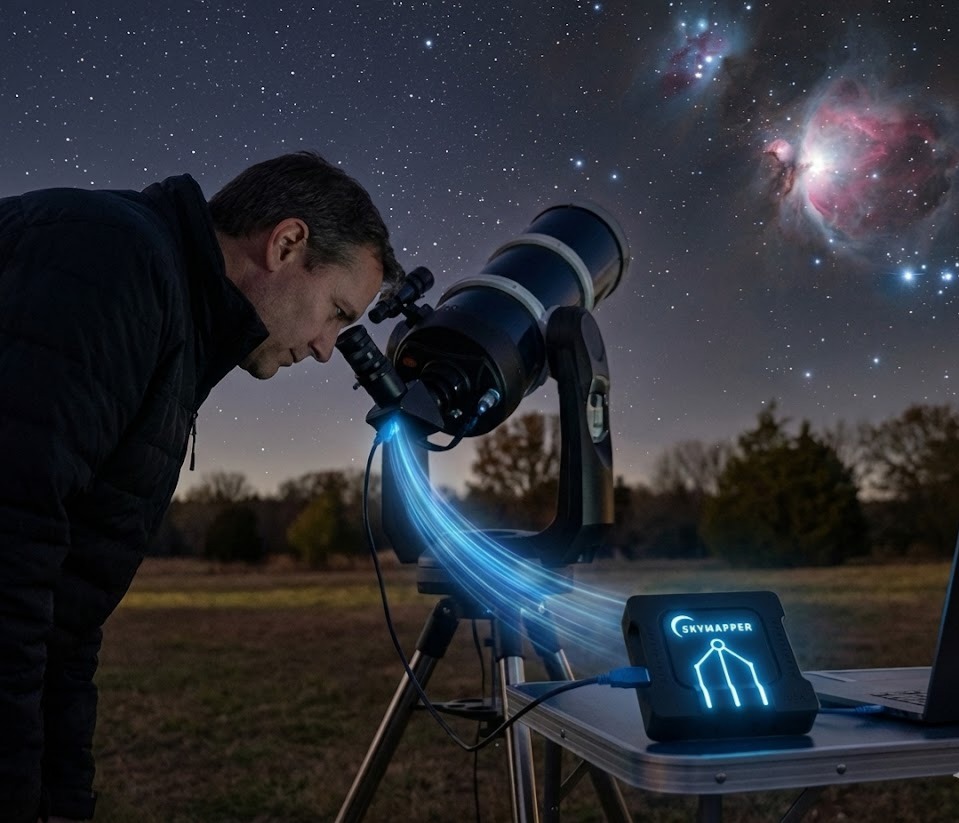
2. Community-Powered Infrastructure The old model relies on governments building billion-dollar space telescopes. The DePIN model relies on you. By connecting your telescope to the SkyMapper network via SkyBridge, you become a node in a global scientific instrument. You aren't just a stargazer anymore; you are a data provider, contributing to humanity's understanding of the universe.
3. Incentivized Participation The genius of DePIN is that it aligns incentives. In traditional networks, you pay to use the service. In the SkyMapper network, you are rewarded for contributing to it. Our tokenized model ensures that those who expand the network's coverage—by capturing data on satellites, transient events, or space debris—share in the value they create.
The Future is Decentralized
The "DePIN Data Revolution" is not just coming; it is already here. The Decentralized Storage Alliance is proving that distributed data is safer and more efficient. SkyMapper is proving that distributed observation can unlock secrets of the universe that have remained hidden simply because we didn't have enough eyes on the sky.
We are moving from an era of data monopolies to an era of data sovereignty. Whether you are tracking satellites, hunting for asteroids, or simply admiring a nebula, you are part of a network that is owned by everyone and stopped by no one.
Join the revolution. Connect your telescope, earn rewards, and help us map the entire sky, all the time.