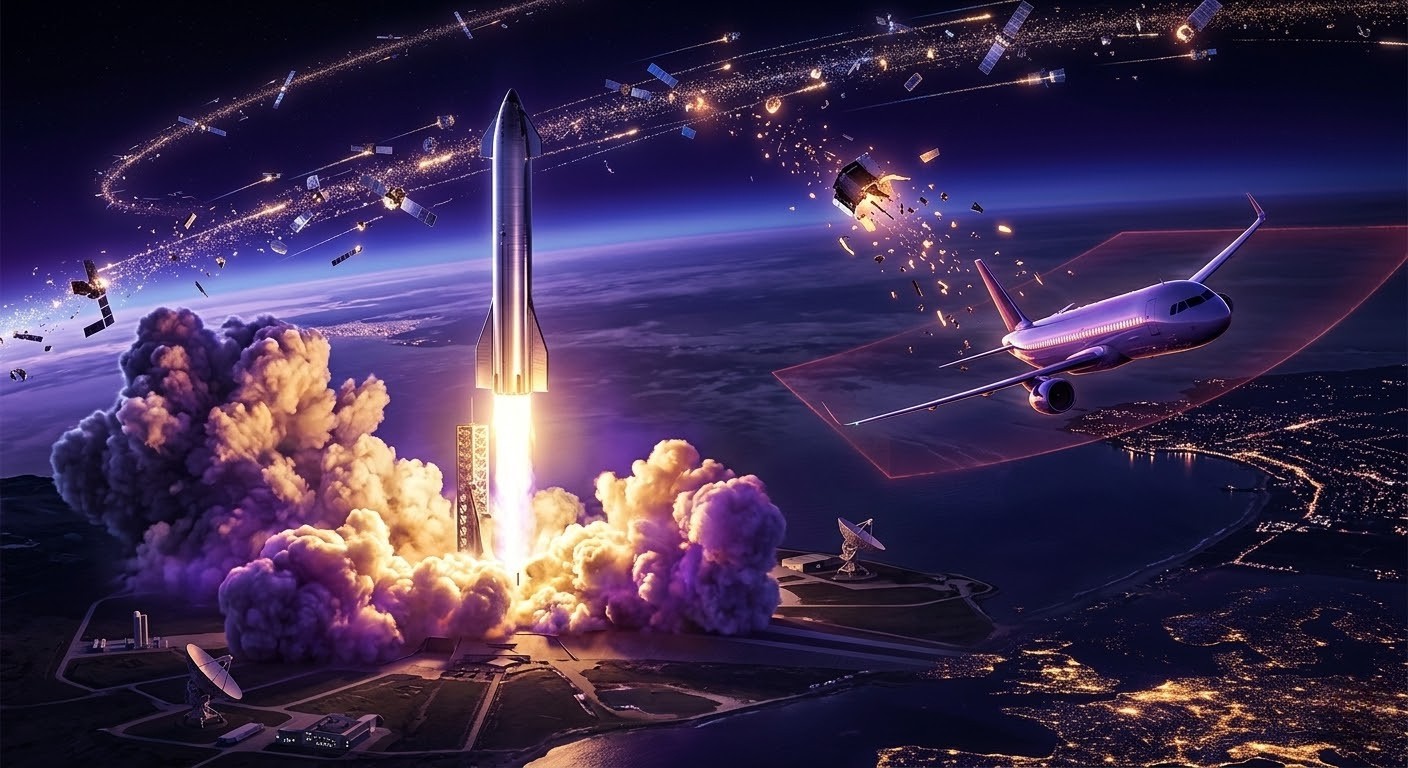
The modern "Space Race" isn't just about reaching the Moon or Mars anymore; it’s about managing the increasingly crowded "orbital highways" just above our heads. A recent investigative report by ProPublica has pulled back the curtain on the growing tension between rapid commercial launch schedules and the regulatory agencies tasked with keeping the skies safe.
As the number of satellites in orbit is projected to skyrocket from 6,000 today to over 27,000 by 2030, the margin for error is shrinking. For space engineers and regulators alike, the challenge of determining risk has never been more complex, or more urgent.
The Invisible Math of Orbital Risk
Determining the risk of a launch isn't as simple as checking a flight path. Space engineers must account for a staggering number of variables:
- The "Kessler Effect": This is the nightmare scenario where a single collision creates a cloud of debris that triggers a chain reaction, eventually making certain orbits unusable for generations.
- Fragmented Data: Most current tracking systems are closed or delayed. When a rocket stage re-enters the atmosphere or a satellite nears another object, engineers often rely on "best guesses" based on aging radar data that can be off by thousands of miles.
- Speed and Scale: Objects in Low Earth Orbit (LEO) travel at roughly 17,000 mph. At those speeds, even a piece of "space junk" the size of a marble can strike with the force of a hand grenade.
The ProPublica report highlights how political and commercial pressure to launch faster can sometimes clash with the FAA’s rigorous safety protocols. When the data is murky, regulators have to be conservative to protect life on the ground and assets in space. This "data gap" is exactly where the industry faces its biggest bottleneck.
How SkyMapper is Solving the "Awareness Gap"
We believe the solution to orbital congestion isn't just more regulation, it’s better data. While traditional observatories are often limited by schedules, weather, or geography, SkyMapper is building the world's first decentralized, real-time telescope network.
Here is how our network helps mitigate the risks of the New Space era:
1. 24/7 Global Coverage
By connecting thousands of citizen-operated and professional telescopes through our SkyBridge technology, we create a global "mesh" of eyes. If a satellite is obscured by clouds in one region, a dozen other nodes in our network are likely to have a clear view. This allows for continuous tracking that centralized agencies simply cannot match.
2. Blockchain-Verified Accuracy
In an era of AI-generated data and synthetic imagery, scientific integrity is paramount. Every observation on the SkyMapper network is recorded on an immutable blockchain ledger. This ensures that the data used for collision-risk assessments is verifiable, transparent, and tamper-proof.
3. Rapid Response for Re-entry and Anomalies
Our network is designed to respond to cosmic events or satellite anomalies in under two minutes. Whether it’s tracking a defunct rocket body as it begins a dangerous re-entry or identifying an unexpected "shunting" in a satellite constellation, SkyMapper provides the high-cadence monitoring necessary to make split-second safety decisions.
The Path Forward: Democratizing Space Safety
The risks identified in the ProPublica report are real, but they aren't insurmountable. As the commercial space industry grows, we need a "civilian layer" of space situational awareness, one that isn't beholden to a single government or corporation.
SkyMapper is turning backyard astronomers and research institutions into active participants in planetary defense and orbital safety. By mapping the sky together, we ensure that the final frontier remains open, safe, and accessible for everyone.
Want to help protect the orbital highways? Learn more about how you can join the network or access our real-time satellite data at skymapper.io.
SZ3 2026