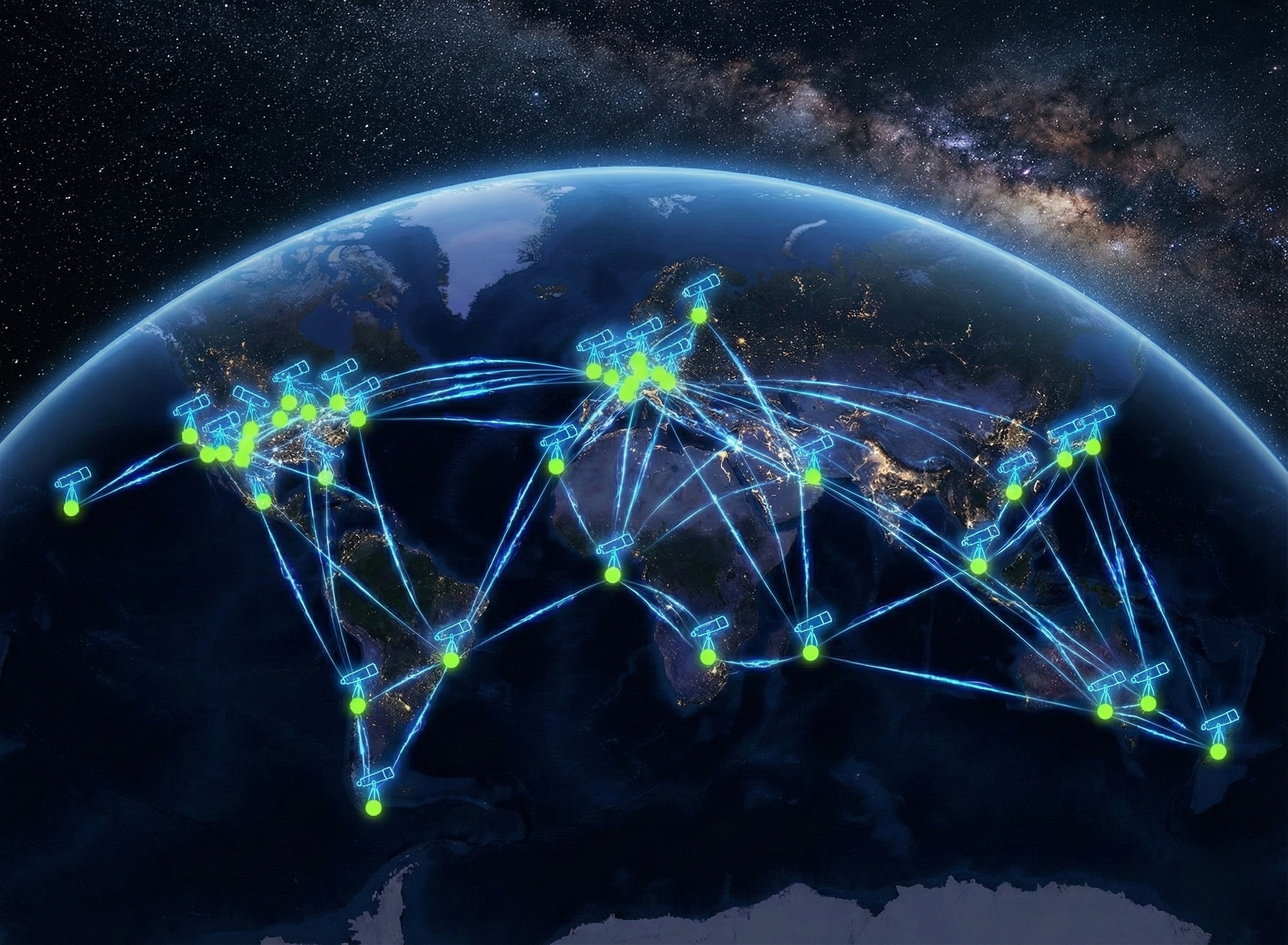
The expansion of the SkyMapper network is not just a statistic, it’s a signal that the democratization of astronomy is picking up real speed. With the network officially hitting 50 active nodes this month, we have crossed a critical threshold. That is 50 remote eyes on the sky, 50 distinct vantage points, and 50 bridges between the cosmos and users sitting at home.
What’s even more exciting is the trajectory. Experts and internal data predict that this growth is about to go exponential. As more "smart" telescopes come online, we aren't just adding dots to a map; we are building a living, breathing planetary observatory.
But a network is only as good as its nodes. While the number 50 is a headline, the locations are the story. We want to highlight a few of the unique outposts that have just signed on or are coming online, places that prove astronomy belongs to everyone, from major centers to individual pioneers.
Centre Astro (France): Institutional Power Joining the Grid
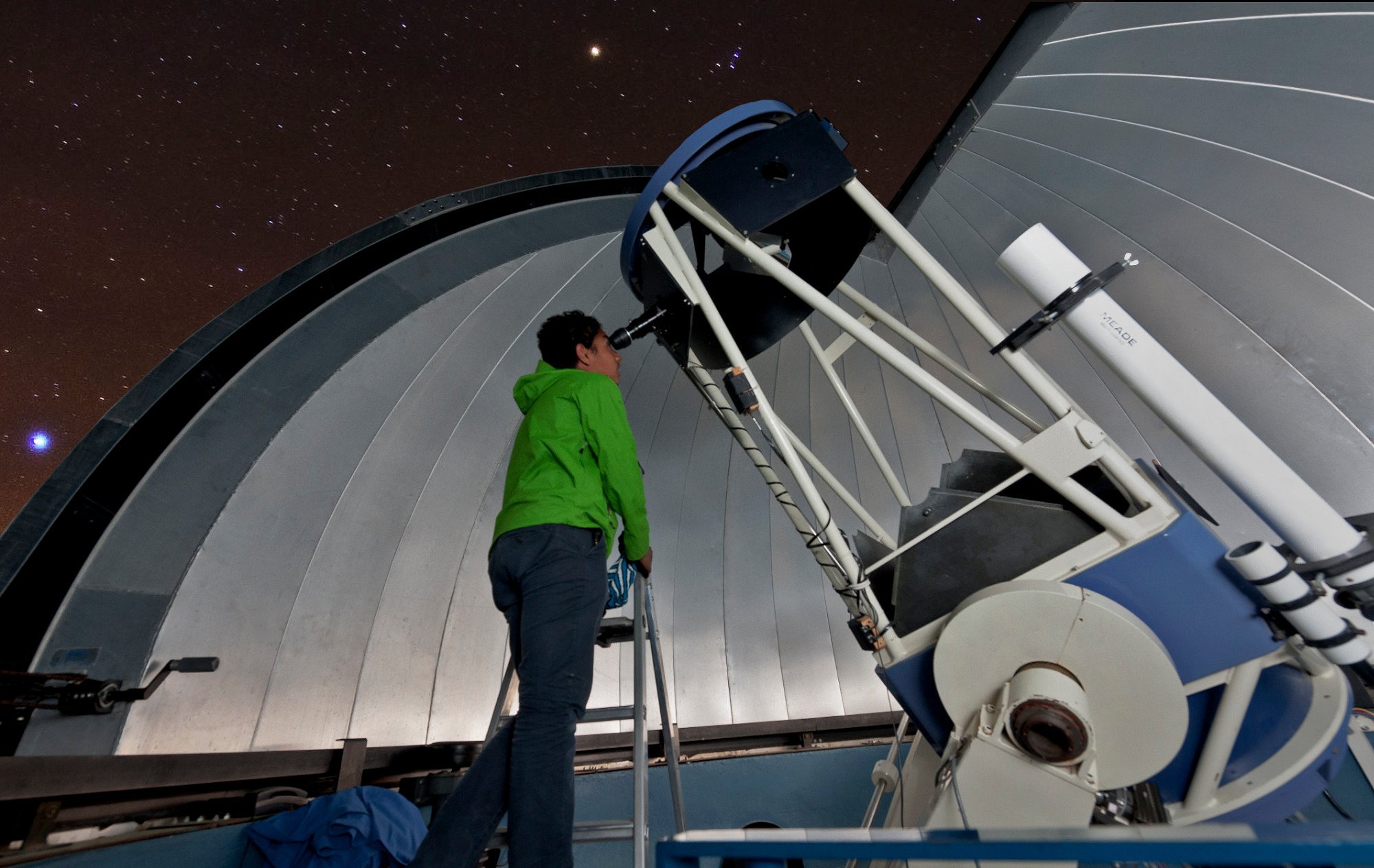
One of the standout additions this year is Centre Astro in France, referring to the renowned Centre d'Astronomie de Saint-Michel-l'Observatoire. This represents the intersection of professional-grade infrastructure and the decentralized ethos of SkyMapper. Located in a region famous for some of the clearest skies in Europe, Centre Astro brings a level of prestige and optical quality to the network that users will be itching to access. When a facility dedicated to public outreach and education plugs into a global grid, the potential for citizen science skyrockets.
Adolfo Soler: The Pioneer of the Canaries
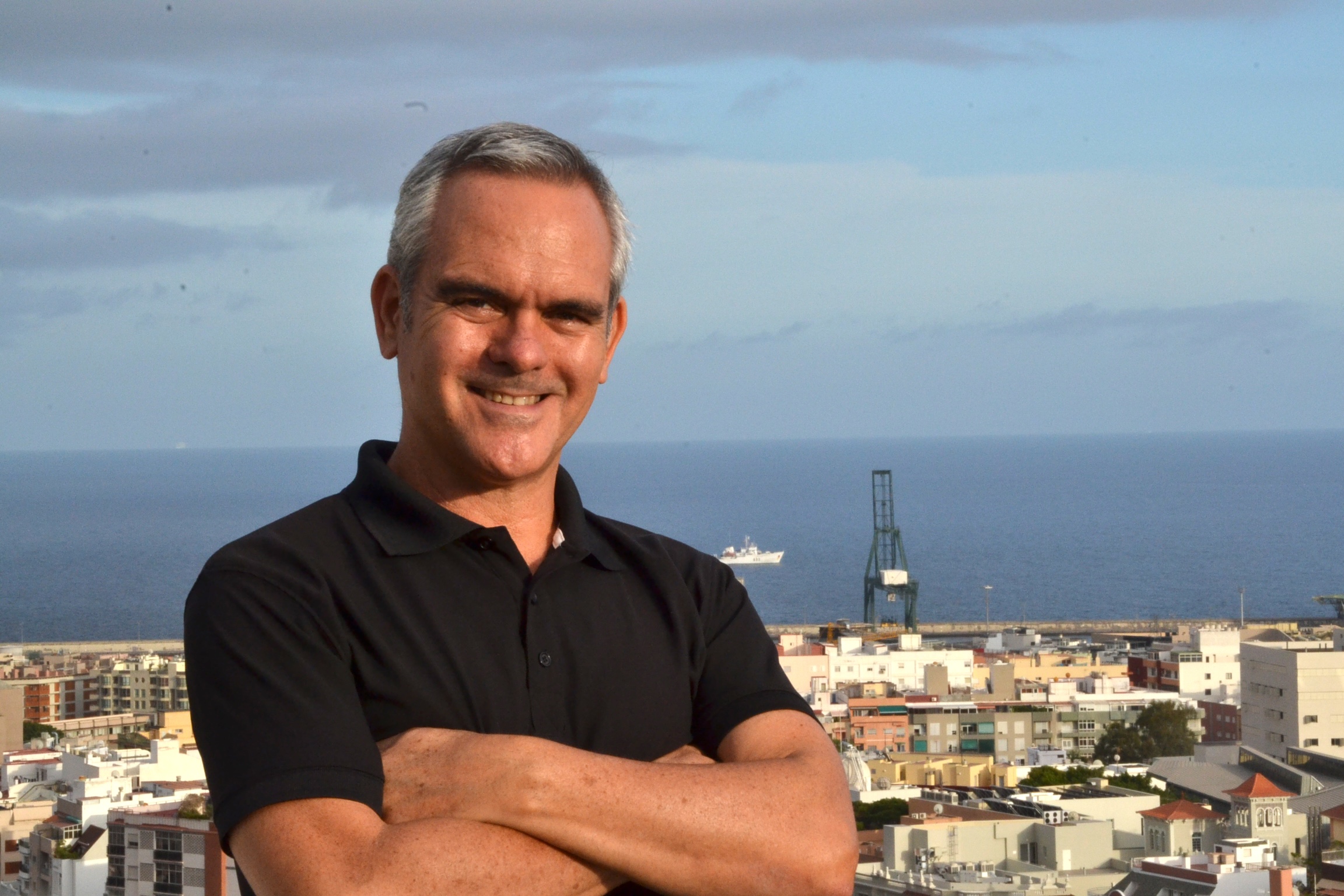
On the other end of the spectrum, but no less important, is Adolfo Soler. He’s not an institution; he’s an individual. But he holds the distinction of operating our very first telescope in the Canary Islands.
For those in the know, the Canaries are a holy grail for astronomers, boasting high altitude, stable air, and minimal light pollution. By bringing a node online here, Adolfo isn't just connecting a telescope; he is unlocking one of the world's premier observing windows for the entire SkyMapper community. It’s a perfect example of how one person’s passion can upgrade the capabilities of the whole network.
The "New North": Pushing the Boundaries in Canada
Perhaps the most adventurous addition is the "New North" telescope. Deployed to Northern Canada by SkyMapper's own Franck Marchis, this node represents the network's push into extreme latitudes.
While it hasn't been fully connected yet, the anticipation is palpable. High-latitude observatories offer unique opportunities, including continuous viewing of circumpolar objects and potential aurora monitoring. It’s a bold logistical feat that demonstrates the network's commitment to covering every angle of the sky, no matter how remote.
FAAQ: Unlocking the Skies of Quebec
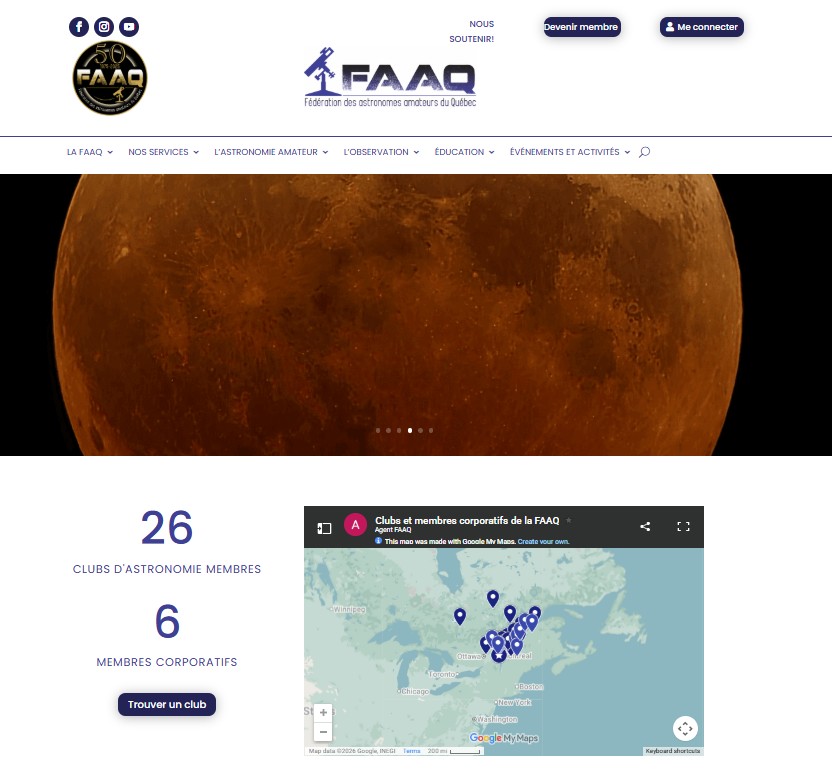
Finally, the addition of FAAQ (Fédération des astronomes amateurs du Québec) marks a massive strategic win for community-driven astronomy. This isn't just a single telescope; it is a gateway to the passionate community of amateur astronomers across Quebec.
By partnering with a federation dedicated to collaborative science and public accessibility, SkyMapper is tapping into a vibrant network of francophone observers and dark-sky locations. FAAQ’s mission to democratize the night sky aligns perfectly with our own, and their inclusion suggests a future where entire clubs and federations, not just individual observatories, join the grid. This partnership strengthens our coverage in Eastern Canada and brings a wealth of institutional knowledge and enthusiastic "citizen scientists" into the fold.
The Road Ahead
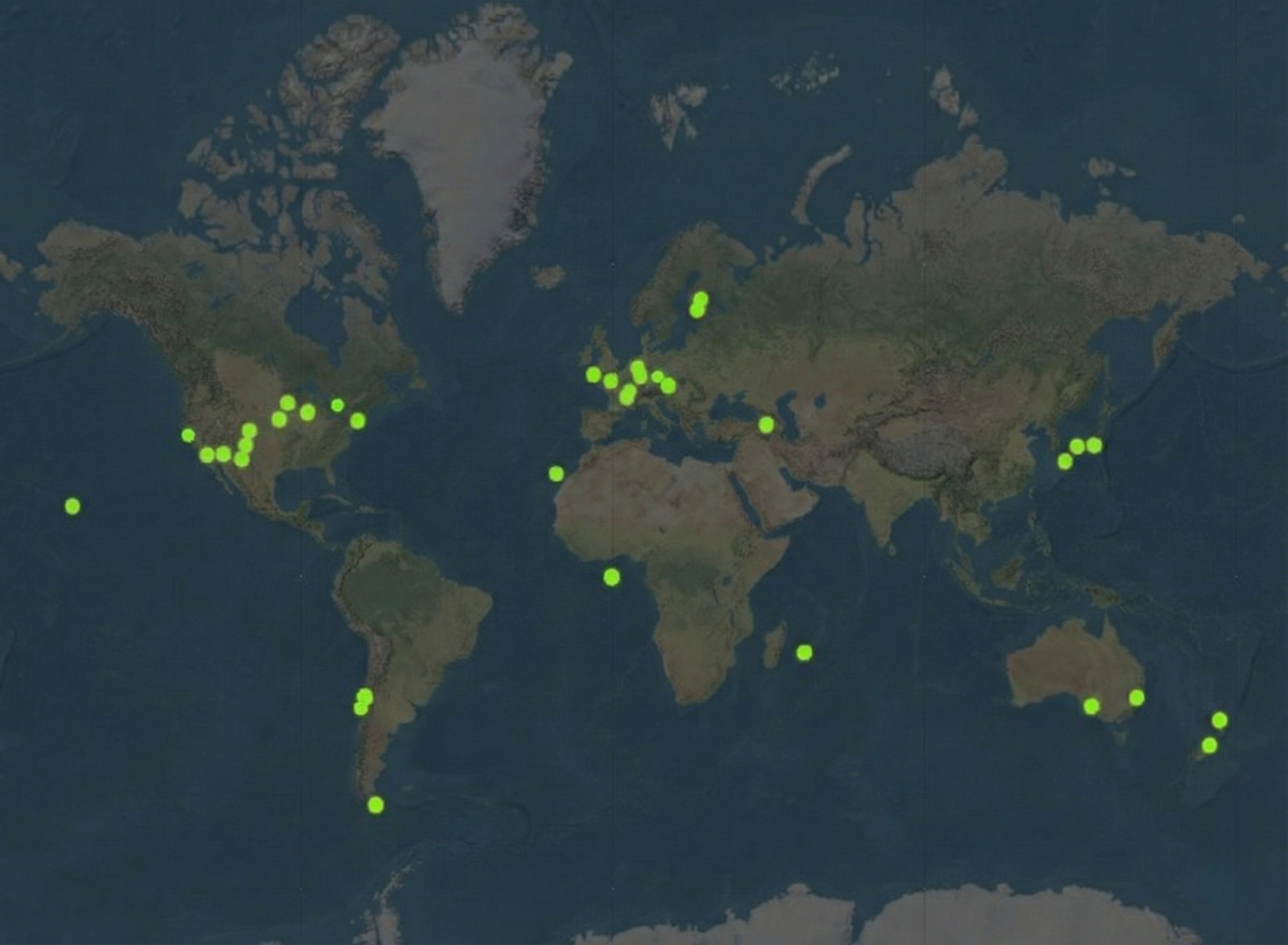
SkyMapper's considerable strength lies in its global diversity, encompassing 50 active nodes and some, from the professional observatories of France to the volcanic elevations of the Canary Islands and the arctic expanses of Northern Canada. Our network is poised for significant expansion. The central question has shifted from "what new astronomical discoveries await?" to "where will we establish our next observation post?"
We have exciting news: your Unistellar telescope can now become a vital part of the expanding SkyMapper network. Soon, ASCOM Alpaca-driven telescopes will also be able to connect via SkyBridge. By participating, you gain immediate access to all observations collected across the entire SkyMapper network. Discover how SkyBridge can enhance your research and observations, now!
SZ3 2026