.JPG)
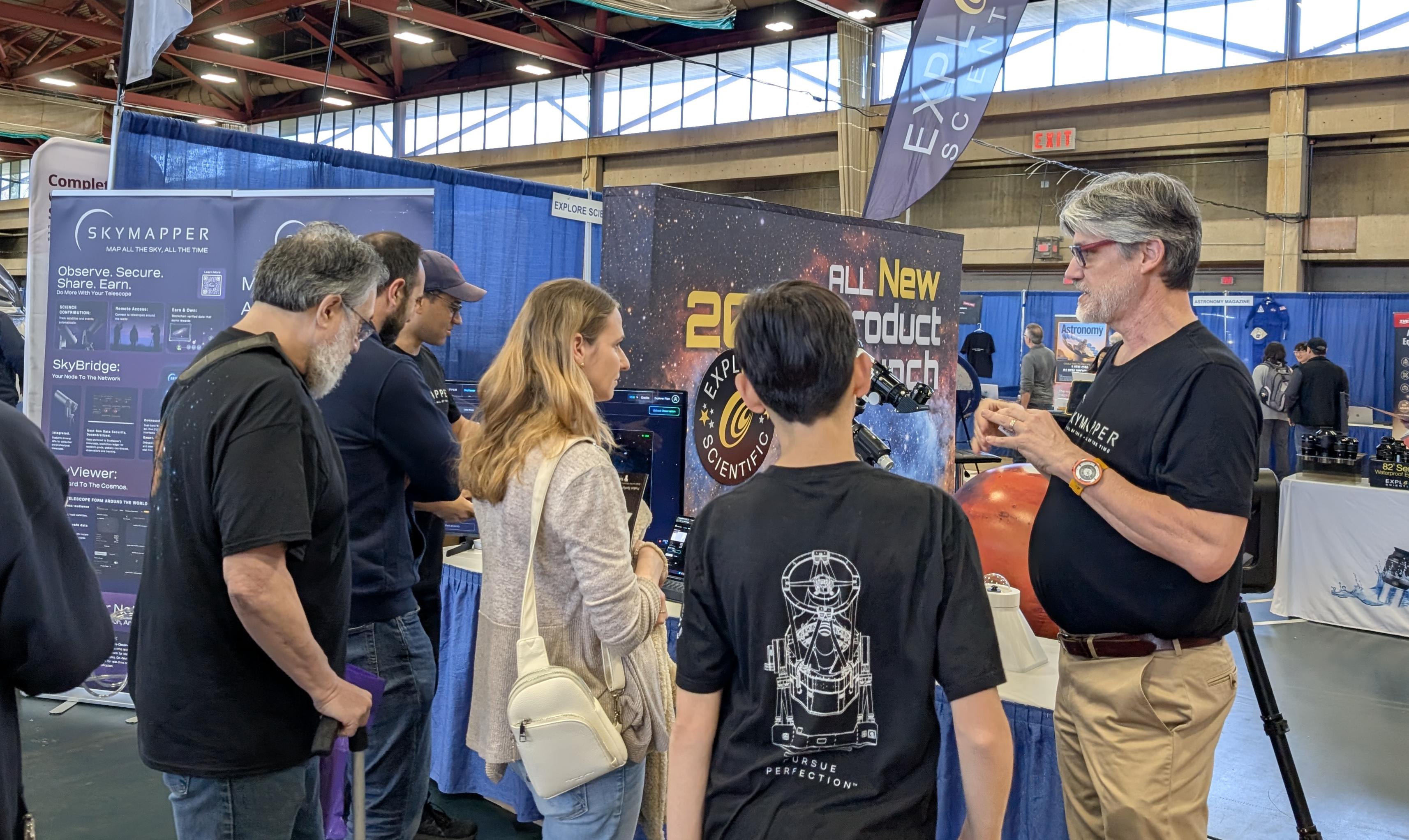
The SkyMapper team has just returned from the 2026 Northeast Astronomy Forum (NEAF) in Suffern, NY. While the dust, or rather, the stardust, is still settling after the April 11–12 event, we find ourselves reflecting on the incredible state of our community.
NEAF has long been the "Super Bowl" of amateur astronomy. Walking through the halls of Rockland Community College, surrounded by everything from cutting-edge CMOS cameras to massive Dobsonian mirrors, you realize that these events are the heartbeat of the hobby. They aren’t just trade shows; they are nexus points where the "backyard observer" transforms into a critical contributor to global science.
The Power of the Backyard: Innovation at Home
We are currently living through a golden age of observing technology. Just a decade ago, tracking a faint asteroid or contributing to exoplanet transit data required a PhD-level setup. Today, thanks to the rapid innovation in smart telescopes, automated mounts, and sophisticated software, that power sits in a person’s backyard.
This democratization of technology means that the barrier to entry for "real" science has never been lower. Innovation in optics and sensor sensitivity has turned consumer-grade gear into high-precision scientific instruments. But the hardware is only half the story; the real power lies in the people behind the eyepieces.
Quantity is a Quality All Its Own: Amateurs vs. Professionals
In the world of astronomy, there is a massive disparity between professional resources and amateur passion.
- Professional Observatories: There are approximately 900 to 1,000 professional research observatories operating worldwide today. These are facilities staffed by professional astronomers, often funded by governments or universities, housing telescopes generally larger than 2 meters. While these facilities, like the Keck Observatory or the Very Large Telescope (VLT), are incredibly powerful, they are also "time-poor." Every minute of observation time is booked months in advance for specific, narrow research projects.
- Recreational Telescopes: In contrast, there are millions of recreational telescopes across the globe.
While a hobbyist’s 11-inch Schmidt-Cassegrain cannot match the depth of a 10-meter professional mirror, the sheer volume of amateur "glass" creates a global network that professionals can only dream of. Hobbyists are the "obsessed eyes on the sky." They are the majority. They are the ones who can monitor a single variable star for weeks on end, or scan the horizon for unexpected comets and supernovae that professional telescopes, focused on deep-field patches of sky, simply miss.
The Scientific Core: Beyond the NEAF Floor
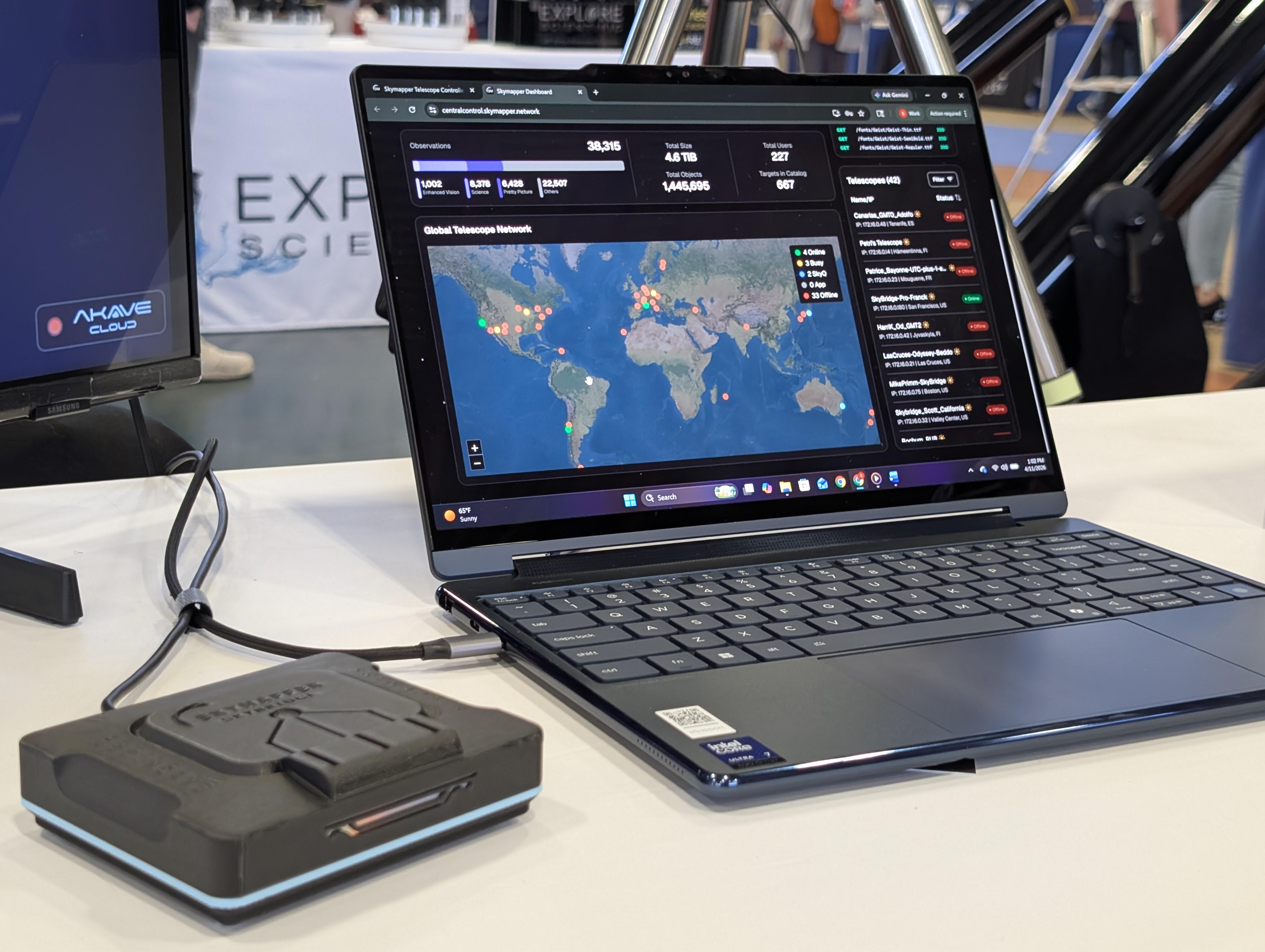
Although NEAF showcased the newest astrophotography gear, the real power of citizen science often lies outside the trade show environment. Our strategic partnerships, for example, with Unistellar and the SETI Institute, are critical to evolving the citizen science model into a network-based science model. These collaborations prove that consumer astronomy tools can be transformed into validated, rigorous scientific instruments. By channeling data through the SETI Institute's professional scientific pipelines, we effectively integrate dedicated backyard astronomers into official network campaigns, ensuring that their collected data receives professional validation and leads to officially recognized, peer-reviewed discoveries.
The Brain Trust: Why Companies Must Connect
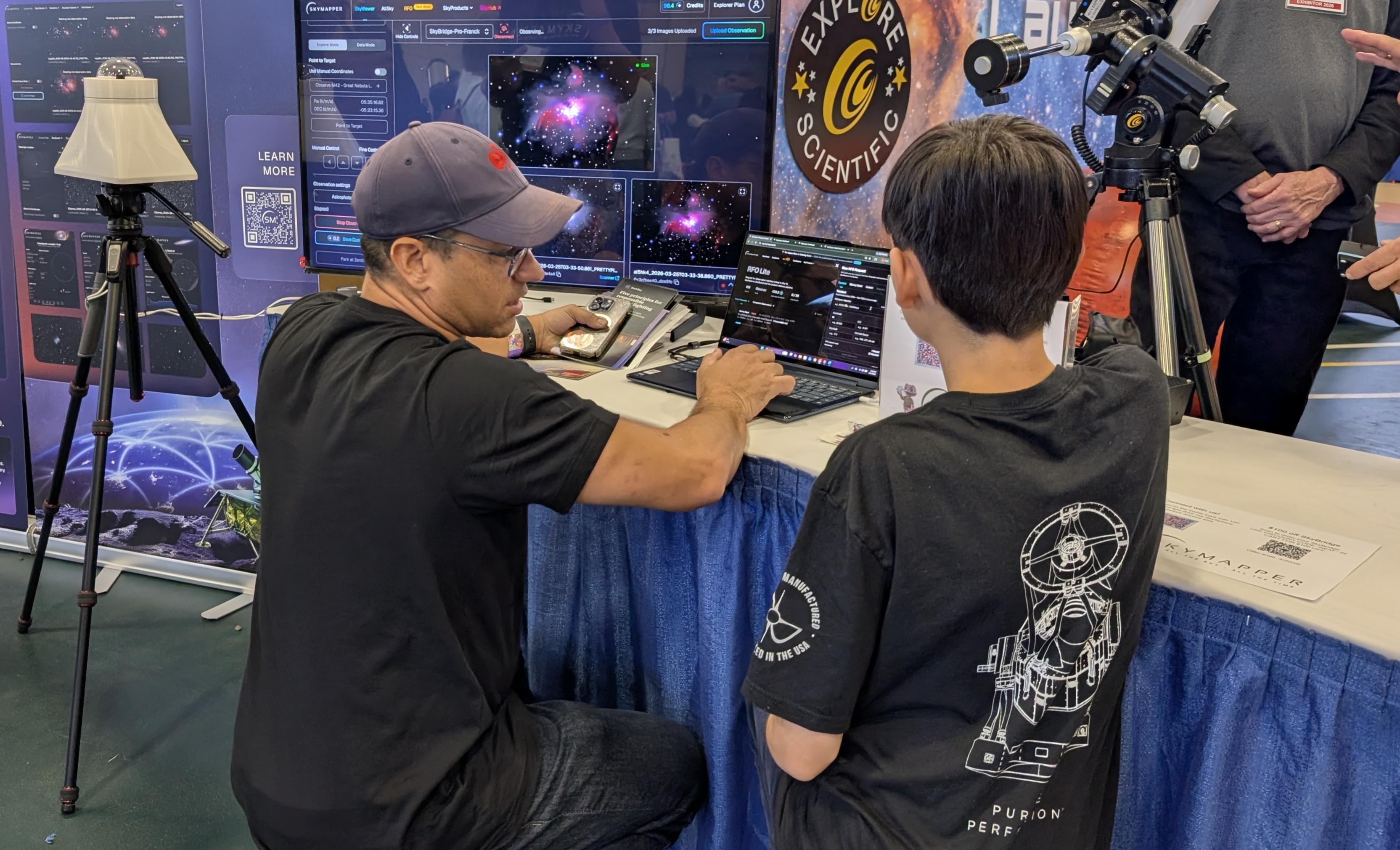
At NEAF, the SkyMapper team found plenty of opportunities to "pick the brains" of other industry leaders who truly "get it." We chatted with teams from Explore Scientific, and dozens others. What we found was encouraging: these companies understand that they aren't just selling hardware; they are fueling a movement.
These innovators recognize that astronomy is bigger than just owning a telescope. It is a community that wants to engage, learn, and share. By building products that facilitate data sharing and community engagement, these companies are keeping citizen scientists connected to the larger scientific narrative. They understand that their responsibility extends beyond the transaction, they are stewards of the night sky.
The Danger of the "Walled Garden"
However, our conversations also revealed a troubling counter-trend. We were shocked to find that some emerging players in the small smart telescope space are choosing a path of isolation.
When discussing the potential for community-driven data sharing with some budget-focused manufacturers, their responses were jarring: In short, participating in citizen science "isn't part of our business model."
The overall feeling from this segment of the industry was one of being "all about the profits.” Companies that prioritize profits over scientific integrity and integration, seem to be a threat to expos like NEAF.
The responsibility of a telescope company isn't just to sell an optic; it's to strengthen the science of astronomy by bringing people together, not isolating them in their own proprietary experiences.
Conclusion: A Fluke or a Trend?
This year’s NEAF felt different. While the passion was as high as ever, the attendance was notably lower than in previous years. This leaves us with a lingering question: Is this a fluke, or a trend?
Is the rise of digital communities and remote-access observatories making physical expos less necessary? Or are "walled garden" business models beginning to fracture the community spirit? If users are siloed by their hardware and discouraged from participating in the wider scientific community, the very reason to gather and "pick each other's brains" begins to disappear.
At SkyMapper, we remain firmly citizen science focused. We believe events like NEAF have high value because they remind us that we are part of something larger. Whether we are meeting in a crowded expo hall or sharing data through a SETI-linked network, the citizen scientist remains the backbone of our understanding of the cosmos.
The professionals might have the biggest mirrors, but the amateurs have the most eyes. And in a universe as vast as ours, we need every single one of them looking up, together.
SZ3 2026