If you’ve been following the latest news, you might have seen a comparison that perfectly captures our mission. We often look to the James Webb Space Telescope (JWST) as the pinnacle of modern astronomy, a time machine that peers billions of years into the past to show us the universe as it was at the dawn of time.
But while the JWST shows us history, who is watching the present? And more importantly, who is inspiring the future?
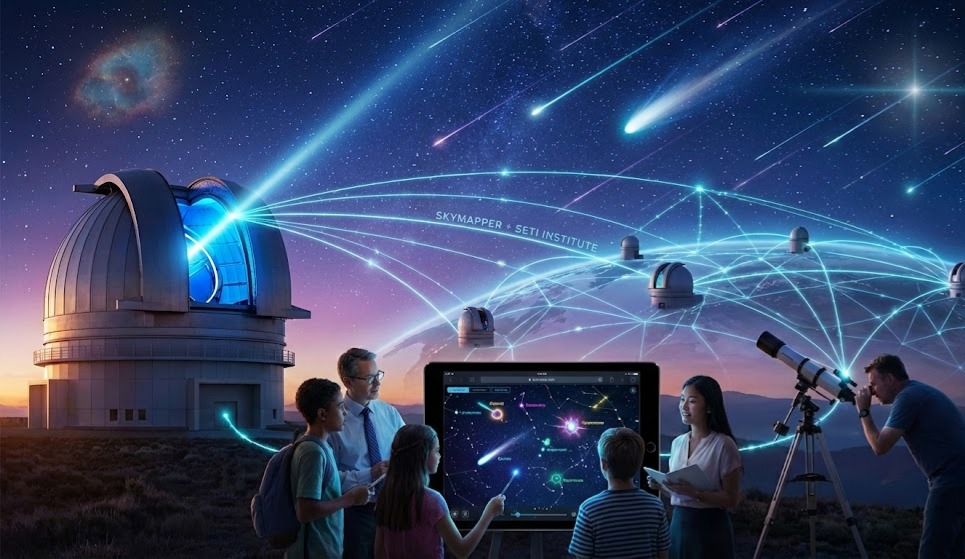
At SkyMapper, we believe looking back is only half the picture. The universe isn't just a museum of ancient galaxies, it is a dynamic, shifting environment happening right now. Through our strategic partnership with the SETI Institute, we are not only capturing this activity, we are helping to bring it directly into the hands of citizen scientists and classrooms.
Strategic Partners in Space Education
The core of SkyMapper's strategic alliance with the SETI Institute is the shared ambition to accelerate space education. This partnership is fundamentally about expanding beyond research to ensure that students and educators globally have equitable access to the wonders of the cosmos.
Astronomy has traditionally been the domain of the few, restricted to PhDs with access to massive, centralized observatories. This structure often leaves educators and students on the outside looking in, relying on static textbook images rather than real-time discovery.

Our partnership flips this model. By connecting citizen astronomers, professional observatories, and classrooms via our decentralized SkyBridge network, we are turning the ameature astronomers from passive observers into active participants.
- Real-Time Science in Classrooms: Student of SkyBridge-connected classrooms will be able to access real observational data for coursework, engaging with the sky as it changes tonight.
- Global Connection: In the near future, schools without their own facilities will be able to tap into a global network, ensuring that somewhere on Earth, there is a usable night sky available for study.
The Eye on the Present
Why does this "live" view matter for students and scientists alike? Because the sky changes faster than you think.
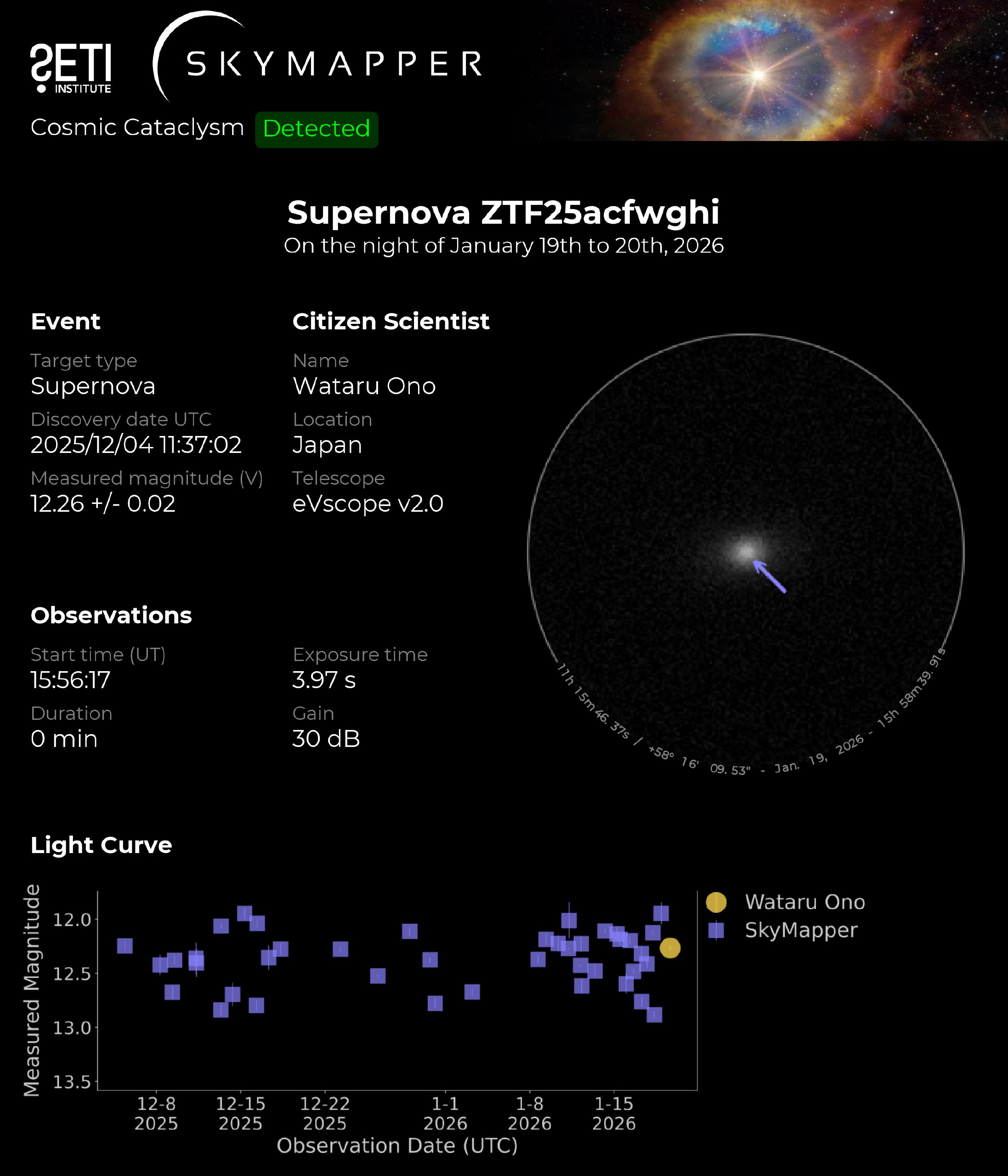
- Transient Events: Supernovae, comets, and asteroids appear and move in the blink of an eye.
- Technosignatures: As part of our work with the SETI Institute, we are scanning for brief optical flashes, potential signals from other civilizations, teaching students that the search for life requires constant vigilance.
A New Era of Discovery
SkyMapper isn't just a single giant mirror on a mountain, it is a living web of smart telescopes. By leveraging Web3 and blockchain technology, we ensure that every piece of data contributed by our community, whether from a backyard enthusiast or a high school physics class, is immutable, verifiable, and scientifically valuable.
The JWST has the "Dawn of Time" covered. We’re here for everything that happens next. Together with the SETI Institute, we are building a legacy where the next great discovery could come from a classroom.
[Learn more about our educational mission and how to join at SkyMapper.io]
Interested in connecting your telescope to our network? Order your own SkyBridge.
SZ3 2026