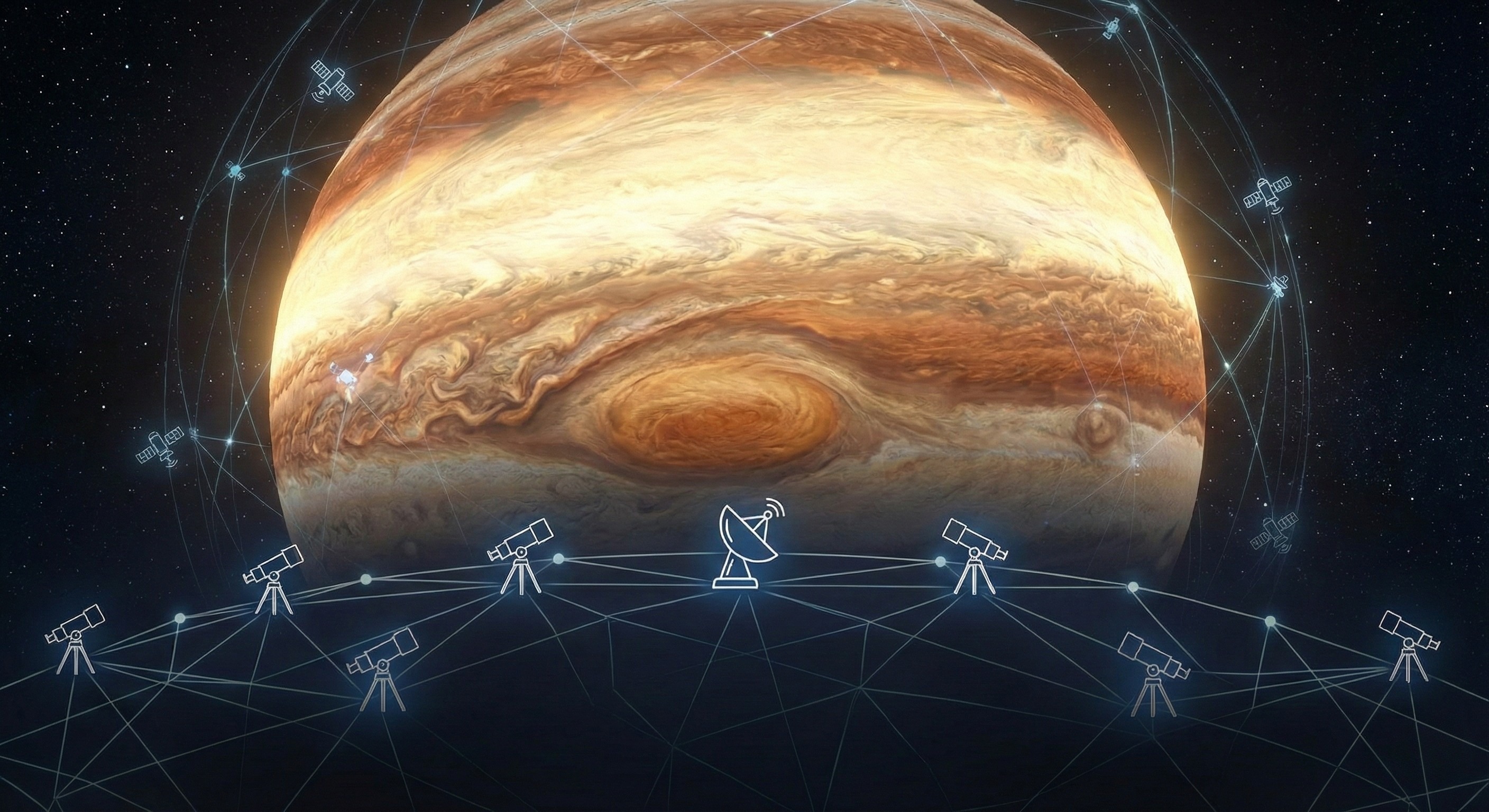
If you thought you knew our solar system’s biggest giant, think again.
Recent findings from NASA’s Juno spacecraft have revealed that Jupiter is actually smaller and flatter than scientists have believed for the past 50 years. According to a new study led by the Weizmann Institute of Science and published in Nature Astronomy, the gas giant is about 8 kilometers (5 miles) narrower at the equator and 24 kilometers (15 miles) flatter at the poles than previous measurements suggested.
For decades, our understanding of Jupiter’s dimensions relied on limited data from the Voyager and Pioneer missions of the 1970s. But thanks to Juno’s extended mission, which allowed it to pass behind Jupiter and send radio signals through its dense atmosphere, we now have a precise new map of the planet’s shape.
This discovery reminds us of a fundamental truth about astronomy: Better data changes everything.
Why This Matters for SkyMapper
The Juno mission is a triumph of specialized, high-budget space exploration. It took a billion-dollar spacecraft and a dedicated team of experts to rewrite the facts about Jupiter. But science doesn't just happen in the control rooms of space agencies, it happens in backyards, on rooftops, and in school observatories around the world.
This is where SkyMapper comes in.
While Juno provides a deep, targeted look at a single planet, SkyMapper is building the world's first decentralized, global space observation platform to watch the entire sky, all the time.

The Collective Force of SkyMapper
Juno’s discovery was possible because it looked at Jupiter from a new angle. SkyMapper applies that same logic to the entire cosmos. By connecting thousands of telescopes through our SkyBridge hardware and SkyViewer interface, we are creating a "collective force" that rivals professional observatories.
Here is how the SkyMapper community advances science:
- Continuous Coverage: A single spacecraft or observatory can only look at one thing at a time. The SkyMapper network operates 24/7. When the sun rises for one observer, it sets for another, ensuring there are always eyes on the sky.
- Catching the Unexpected: Jupiter is frequently hit by asteroids and comets, impacts that produce brief flashes of light. These transient events are often missed by major telescopes because they aren't looking at the right millisecond. A global network of citizen scientists, however, has the bandwidth to catch these fleeting moments, contributing valuable data to Astronomy.
- Verifiable Data: Just as Juno’s radio measurements provided the hard proof needed to resize a planet, SkyMapper uses blockchain technology to ensure every image and data point collected by our users is immutable and verifiable.
Be Part of the Next Discovery
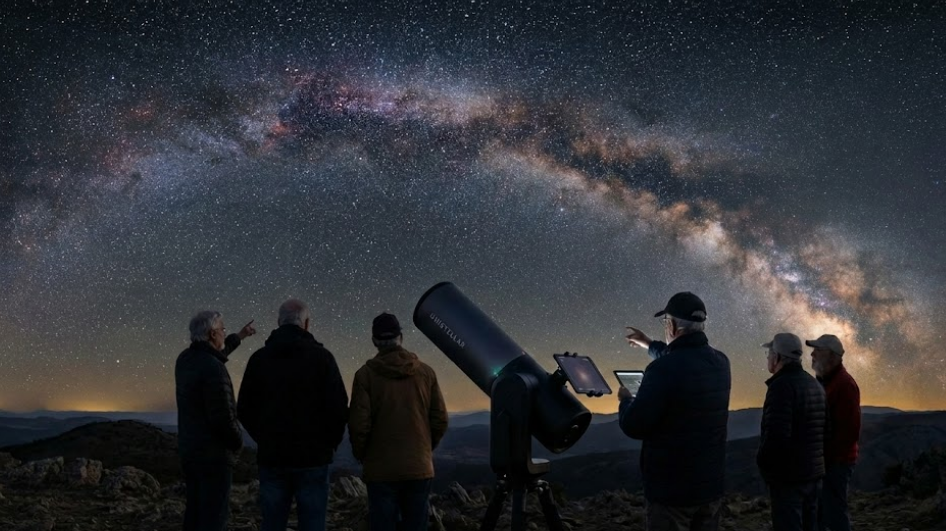
The news about Jupiter proves that even the most "settled" science is open for revision when we have better tools. At SkyMapper, we are putting those tools in your hands. You don't need a billion-dollar probe to make a difference; you just need to look up.
Join the collective force. Connect your telescope, earn rewards, and help us map the universe, one observation at a time.
Learn more about joining the SkyMapper Network.
SZ3 2026