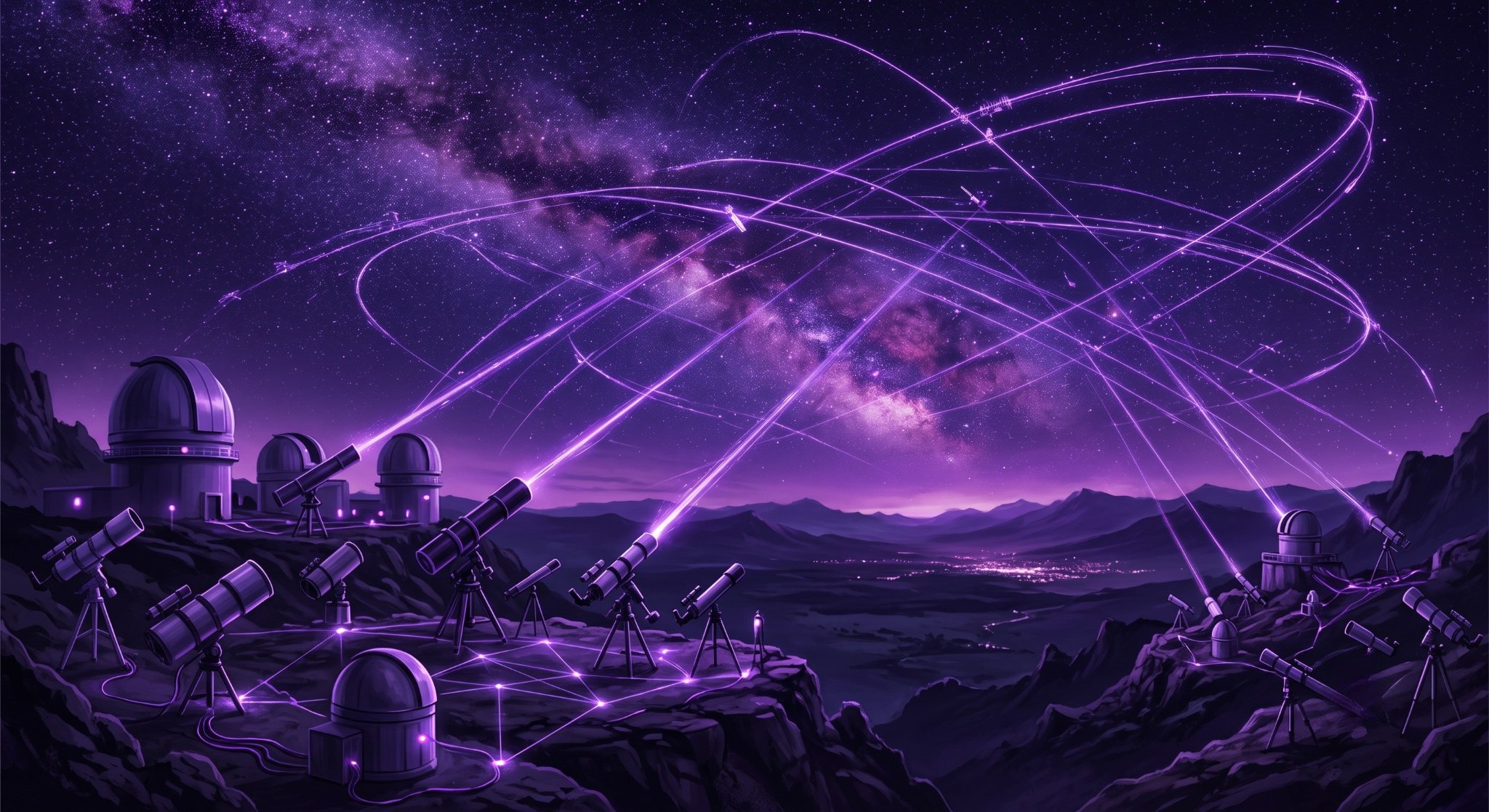
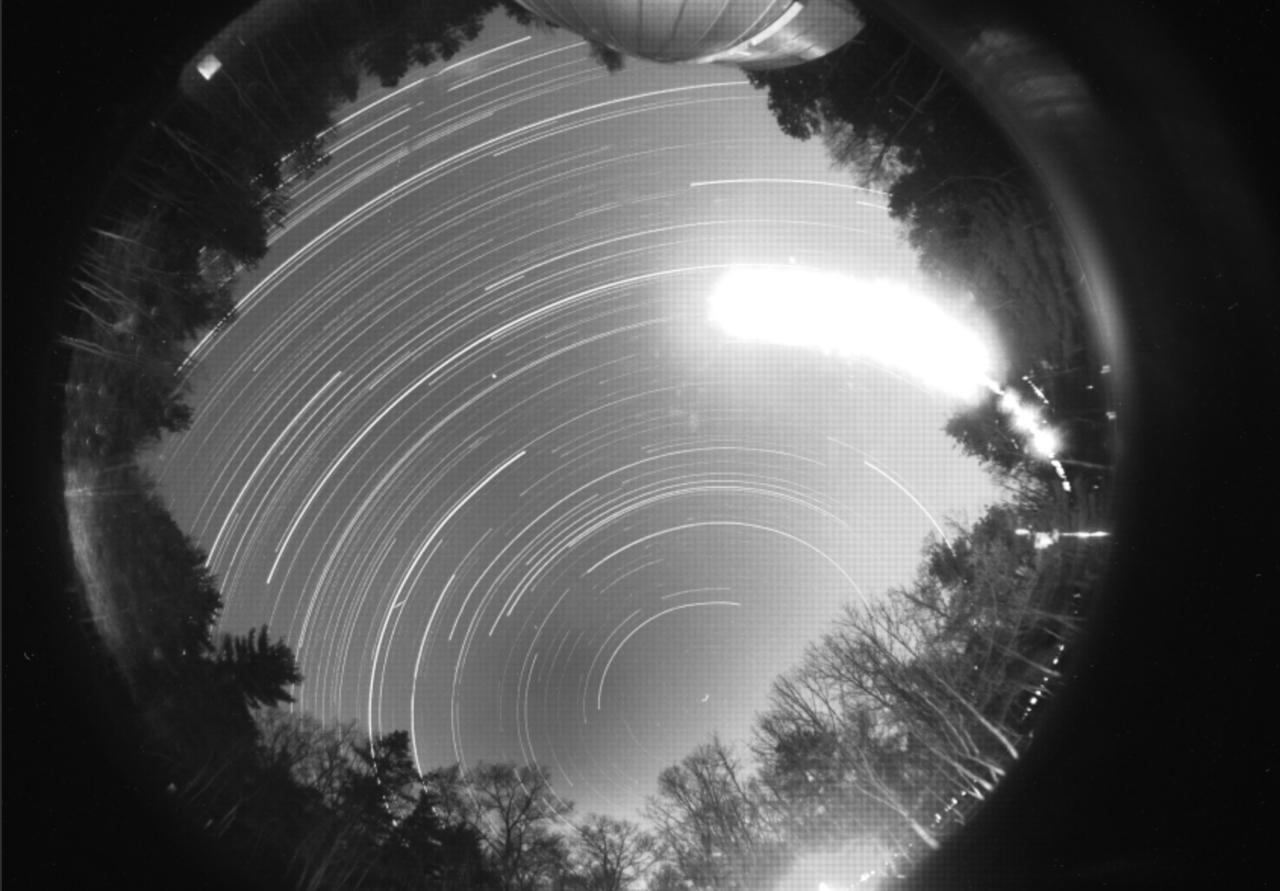
We are thrilled to announce that SkyReserve is officially live in beta on app.skymapper.io. Whether you want complete, uninterrupted command of a live astronomical rig or an automated, high-resolution deep-sky capture delivered straight to your account, SkyReserve introduces two versatile ways to harness the global SkyMapper network.
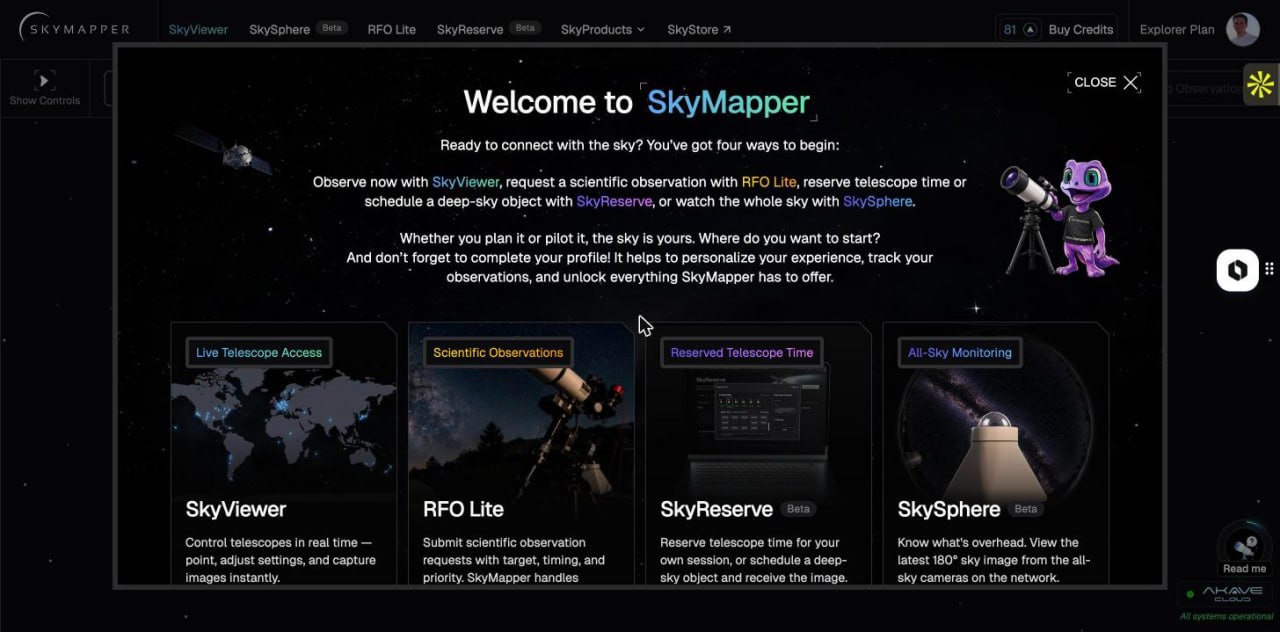
In the app's top navigation bar, you will find both options ready to explore. For those who want hands-on control, Telescope Reservation lets you claim a dedicated setup. You choose a scope, pick a 30-minute block on the live calendar, and take the reins. During your time, nobody else can connect to your instrument. You get 25 minutes of active live control per block, with the final 5 minutes reserved for safe system handoffs and parking. Pricing remains at 5 SkyCredits for every block, matching our standard live session tier, and if unexpected cloud cover, equipment failures, or network drops interrupt your scheduled window, every credit is automatically returned to your balance. You also receive a complete credit reimbursement for any reservation canceled prior to its start time.
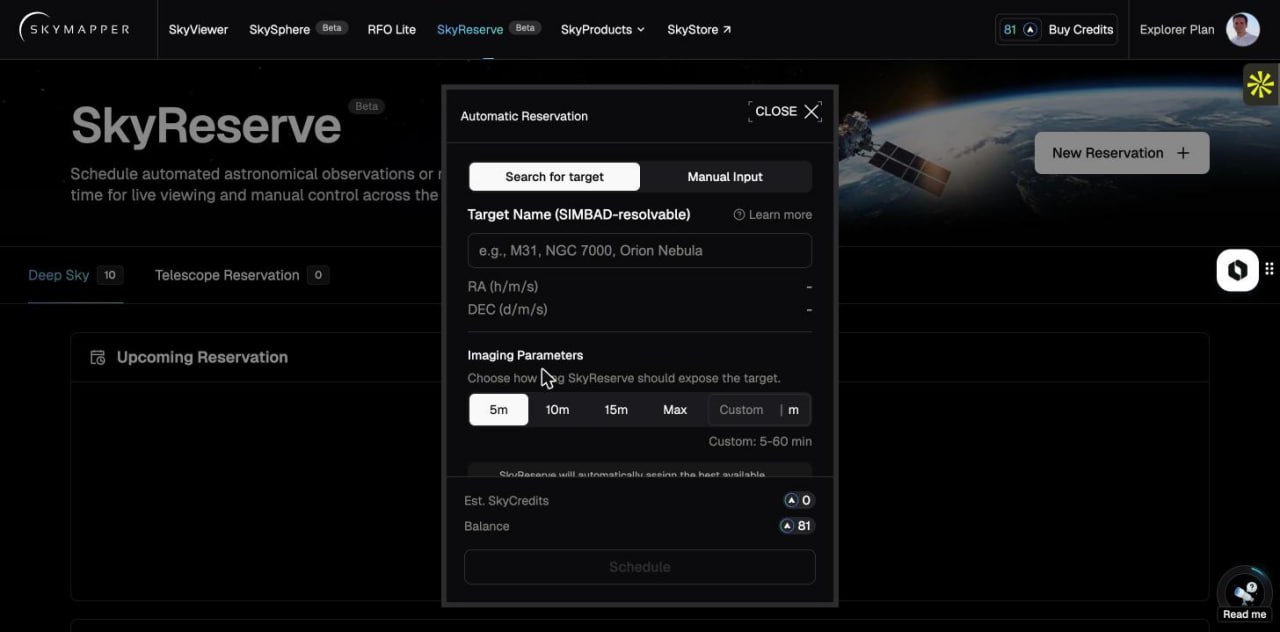
If you prefer to let the platform do the heavy lifting, Deep Sky gives you an automated, on-demand imaging service. You simply type in a target name like the Orion Nebula or enter its coordinates, select an exposure duration between 5 and 60 minutes, and submit your request. SkyReserve routes the task to the best available telescope and captures the target within 48 hours. Once complete, you get an email with a processed color preview alongside raw, uncompressed files ready for local download, which remain in the SkyReserve system for only 30 days after image capture. Rates start at just 1 SkyCredit per 5 minutes of exposure, and if the system cannot fulfill your capture within two days, you get every credit back.
When you step back and look at the platform, SkyReserve's real magic is how much flexibility it offers different kinds of observers. Backyard amateur astronomers under bright city lights or cloud cover can easily access remote dark-sky rigs to capture quality data, making them feel capable and in control. Student astronomers and educators can bring live telescope feeds into classrooms, fostering confidence in their teaching. Advanced astrophotographers can schedule long exposures, empowering them to pursue complex projects from anywhere.
Professional researchers and space industry operators can also gain a massive operational edge. Astronomers tracking sudden transient events like supernovae can use Deep Sky to queue fast target acquisitions across worldwide telescope nodes without filling out tedious proposal forms or waiting months for committee approvals.
Telescope owners win here, too. Your telescope earns 1 SkyPoint for each Deep Sky observation it completes for another user. As a result, their peak hours stay open for bookings. Keep in mind that during this initial beta phase, our team is curating which instruments are reservable, and owners cannot yet offer their own telescope.
It's always "prime evening hours" somewhere in the world, however since this is an active beta, we are still smoothing out a few rough edges. Confirmation emails sometimes display start times in UTC rather than your local time; Inside a reserved session, the observations list under the live view can fail to load, so saving images from a reservation is not reliable yet; and telescope availability is limited because not all SkyMapper telescopes are contributing to SkyReserve. We are working hard on fixes for all three.
Have you had a chance to test out SkyReserve yet? Head over to the app, take a scope for a spin, and share your feedback or feature suggestions in the SkyMapper SkyKeepers group on Telegram! Your input helps us improve the platform for all users.