November brings a transitional, high-contrast sky to the SkyMapper network. In the Northern Hemisphere, crisp, longer nights invite observers to bundle up and focus their smart optics on brilliant deep-space targets. Down south, the warming late-spring nights offer excellent, steady windows for high-resolution array mapping.
Since our blockchain-verified network relies on Unistellar telescopes (eVscope and eQuinox fleets) that excel at ignoring light pollution and stacking faint photons, this month’s target list includes spectacular planetary meetups, a distant ice-giant opposition, and high-altitude galactic masterpieces. Charge your power packs, level your tripods, and let's update the SkyMapper global ledger.
1. The Headliner: Mars & Jupiter’s Close Morning Dance (November 16)
Visibility: Global (Excellent High in the East-Southeast Before Dawn)
Throughout November, Mars and Jupiter are the "stars of the show". Visible rising together after midnight, they draw closer each night before reaching a remarkably tight close approach on November 16.
- The View: You'll capture a dramatic, high-contrast duo: the reddish-orange ember of Mars cozying up to massive, brilliant Jupiter, alongside the bright star Regulus nearby in Leo.
- Unistellar Advantage: The autonomous tracking on your scope makes it easy to lock onto both objects before twilight. The sensor's high-contrast stacking will sharply resolve the rusty red of Mars directly alongside Jupiter’s complex cloud belts and its orbiting Galilean moons.
- Smart-Scope Tip: Use high-resolution live processing to capture frames of this dance. Multiple moon-shadow transits occur early in the morning this month—watch for Europa and Ganymede's movements and upload your raw data to support the SkyMapper tracking ledger.
2. Focus Target: Uranus at Opposition (November 25)
Visibility: Global (Visible All Night, Best Near Midnight)
On November 25, the sideways ice giant Uranus reaches opposition, placing it directly opposite the Sun from Earth and making it as bright (magnitude $+5.6$) and visible as it gets all year.
- The Target: Located between Aldebaran and the Pleiades (M45) in the constellation Taurus.
- Unistellar Advantage: Finding a tiny, distant blue-green disk can be impossible manually, but your Unistellar app will place Uranus squarely in your sensor's center.
- The Grid Mission: Continuous stacking is key. Let your eVscope or eQuinox run on Uranus to help confirm its exact coordinates and track its faint orbit against the background stellar fields for the global array.
3. Northern Hemisphere Spotlight: The Triangulum Galaxy (M33)
Visibility: Northern Hemisphere & Tropics (High Overhead at Midnight)
With the New Moon bringing dark, moonless skies on November 9, northern nodes are directed to target Messier 33 (The Triangulum Galaxy).
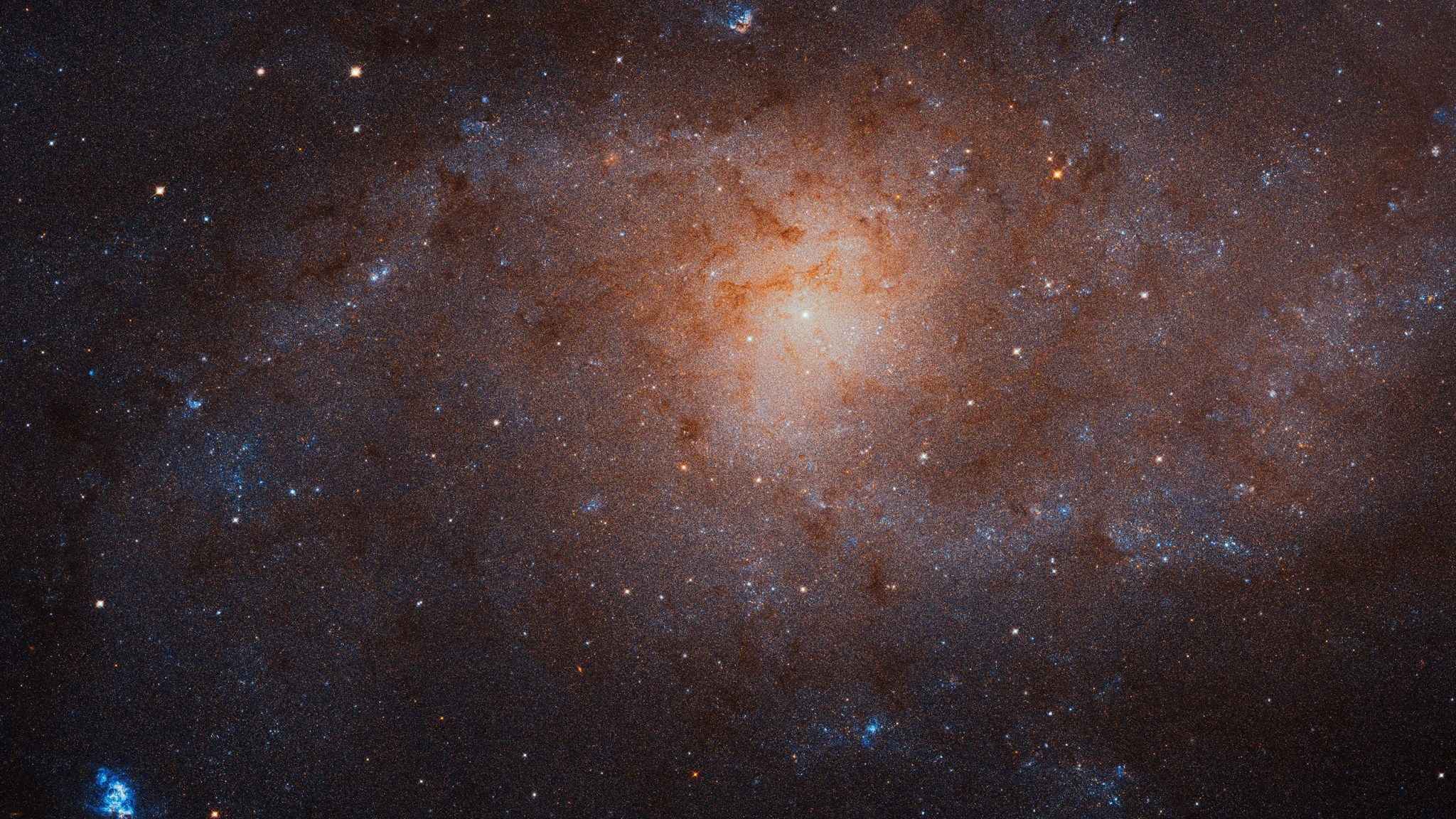
- The Target: A face-on spiral galaxy roughly 2.7 million light-years away, known for its sprawling, star-forming H II regions (like NGC 604).
- Unistellar Advantage: M33 can be notoriously difficult due to low surface brightness. However, your Unistellar telescope’s Enhanced Vision mode will slice through the dark, stacking photons to reveal blue spiral arms and reddish star-forming knots.
- Smart-Scope Tip: Start your stacking and leave it for at least 45 to 60 minutes to capture the outer dust structures and resolve M33’s faint outer arms.
4. Southern Hemisphere Spotlight: The Grus Quadrilateral
Visibility: Southern Hemisphere (High Overhead)
For our southern network nodes tracking through late-spring skies, the primary deep-space directive is the Grus Quartet (NGC 7582, NGC 7590, NGC 7599, and NGC 7552).
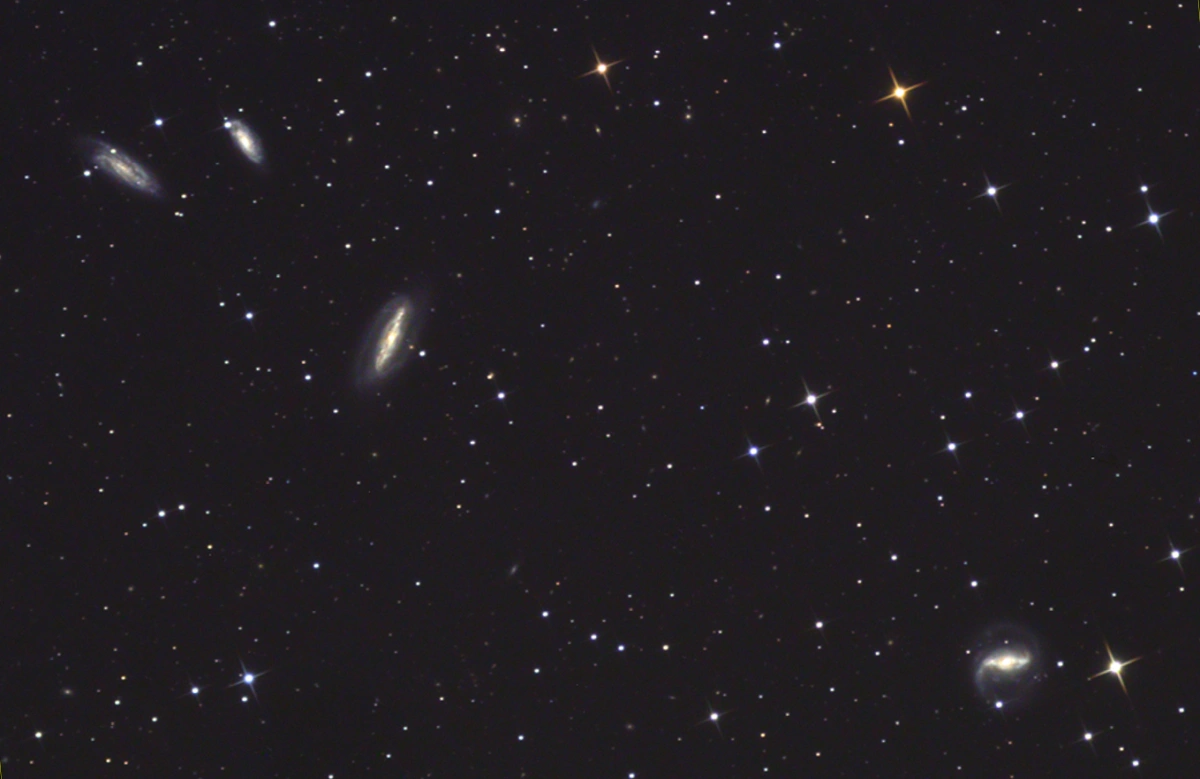
- The Target: A tight, stunning group of spiral galaxies, located roughly 60 million light-years away in the constellation Grus.
- Unistellar Advantage: Also known as the Grus Quartet, this compact galaxy group fits beautifully within your Unistellar field of view. The deep-contrast digital stacking will reveal the distinct orientations, dust lanes, and galactic centers of all four galaxies simultaneously.
5. High-Speed Transient Tracking: The Leonid Meteor Shower (November 17–18)
Visibility: Global (Best After Midnight)
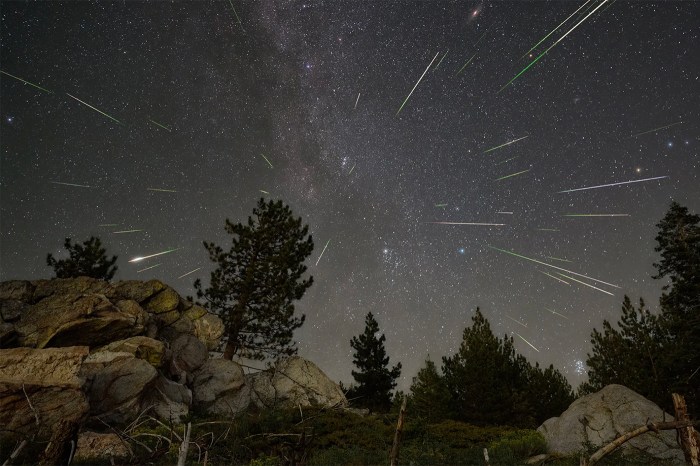
The annual Leonid meteor shower peaks on the night of November 17 into the morning of November 18. Although our telescopes aren't chasing the fast-moving streaks, we want our global network arrays pointing toward Leo (where Mars and Jupiter sit) to document any lingering ionized dust trains or "smoke" left behind by fireballs.
- Unistellar Tip: Focus your smart scope on rich star fields surrounding Leo. Continuous short-exposure runs allow network nodes to capture persistent meteor trains, capturing upper-atmospheric drift data.
The November Network Directive: Update the Grid
With Mars and Jupiter cozying up, Uranus at opposition, and galaxy-hunting season in full swing, your smart telescope is a vital data collection point for our global array.
- Automated Data Contribution: Capture continuous light frames of M33, the Grus Quadrilateral, or the Mars-Jupiter dance to automatically contribute verified tracking data to the SkyMapper ledger.
- Clouded Out? If late-autumn weather blocks your view, log into the SkyViewer portal to access live, low-latency stacked streams broadcasted by active nodes worldwide.
Check your alignment, power up your array, and let’s map the cosmos together.
Clear skies!
— The SkyMapper TeamSummary for Blog Description