Hello SkyWatchers! We continue to be inspired by the incredible astrophotography and passion shared across our burgeoning SkyMapper network and the global skywatching community. To help you stay connected with the cosmos, here’s a heads-up about a rare celestial event happening this October that you won’t want to miss.
Get your telescopes and binoculars ready! We've got some exciting news about a rare celestial event happening this October that you won't want to miss. Mark your calendars for October 20-23, as two potentially bright comets and a meteor shower will be visible simultaneously in the night sky.
This is the perfect opportunity to test the features of our SkyMapper app in coordination with the Unistellar Citizen Science network.
What to Look For:
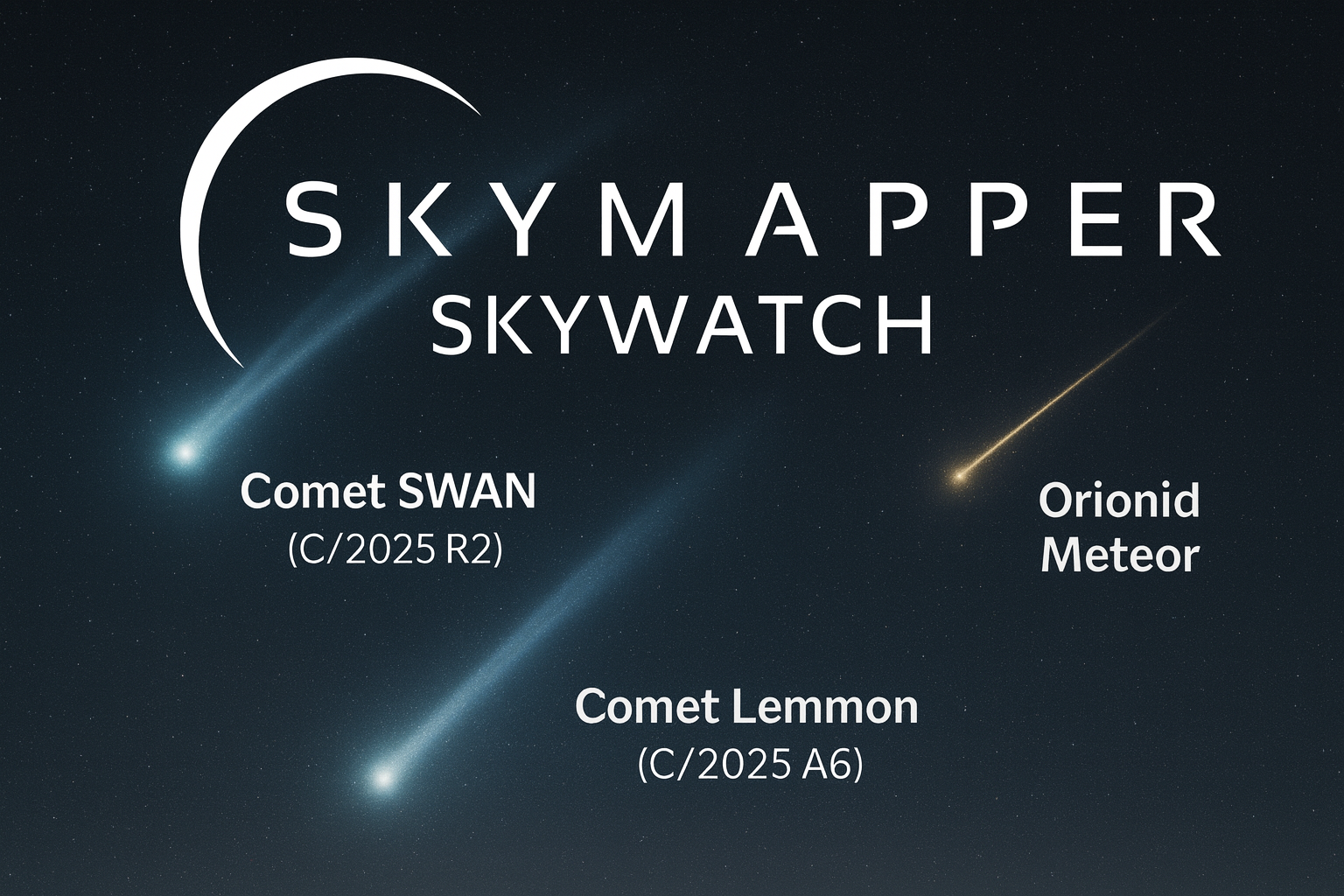
You'll have the chance to spot two comets:
- Comet C/2025 R2 (SWAN): This comet was recently discovered and has a long orbit of over 22,000 years. It's predicted to become visible to the naked eye around October 21st during its closest approach to Earth. Coordinate info: https://theskylive.com/c2025r2-info
- Comet C/2025 A6 (Lemmon): Also making its closest approach to Earth during this time, this comet could also be visible without binoculars. Coordinate info: https://theskylive.com/c2025a6-info
The best part? This spectacle coincides with the peak of the Orionid meteor shower on October 20-21, which is expected to produce about 20 "shooting stars" per hour. This combination of two bright comets and a meteor shower is a once-in-a-lifetime skywatching opportunity. Coordinate info: https://theskylive.com/meteorshower-orionids
Cloudy skies? No telescope? No problem!
There are many ways to enjoy this rare celestial event from anywhere on Earth. You can follow live observations from connected telescope networks like SkyMapper, Unistellar, and public observatories that stream their views online. Major facilities such as the James Webb Space Telescope, Hubble, and ground-based observatories around the world are also expected to capture these comets as they approach, providing stunning imagery and data.
If you’d like to participate, explore astronomy livestreams, planetarium events, and online sky maps that track Comets SWAN and Lemmon in real time. You can also use apps or websites like TheSkyLive and Heavens-Above to find when and where to look.
And for those with clear skies, even a pair of binoculars will bring these cosmic visitors to life. Whether you’re watching online or under the stars, don’t forget to share your photos and experiences with the global astronomy community.
Happy SkyWatching!
SZ3 2025