We see more when we look together.
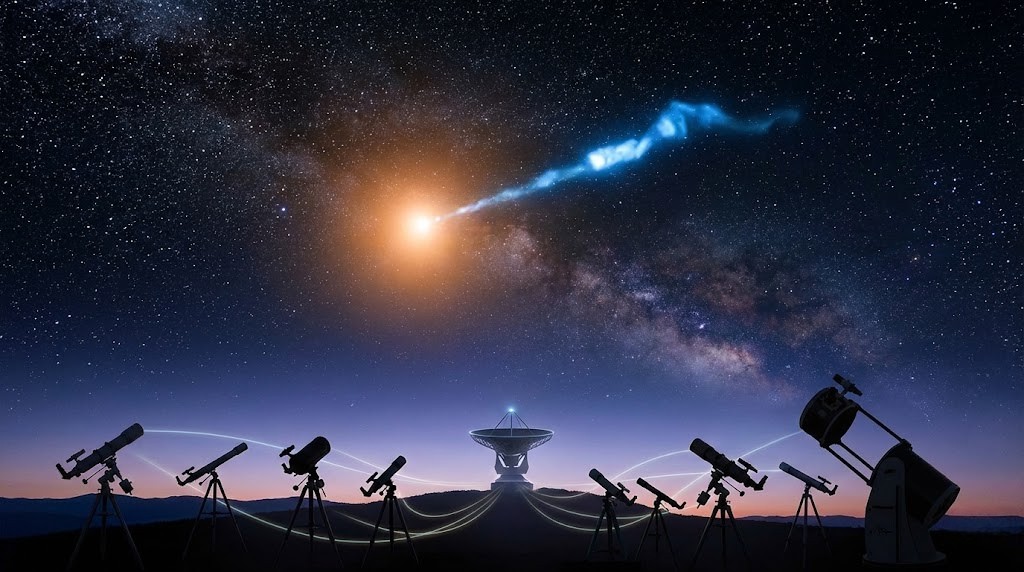
By now, you’ve likely seen the headlines: for the first time, astronomers have captured a direct image of a supermassive black hole, M87*, launching a colossal, 3,000-light-year-long cosmic jet. This isn't just a pretty picture, it’s the missing link connecting the black hole’s famous glowing "shadow" (first imaged in 2019) to the high-energy jets that blast across galaxies.
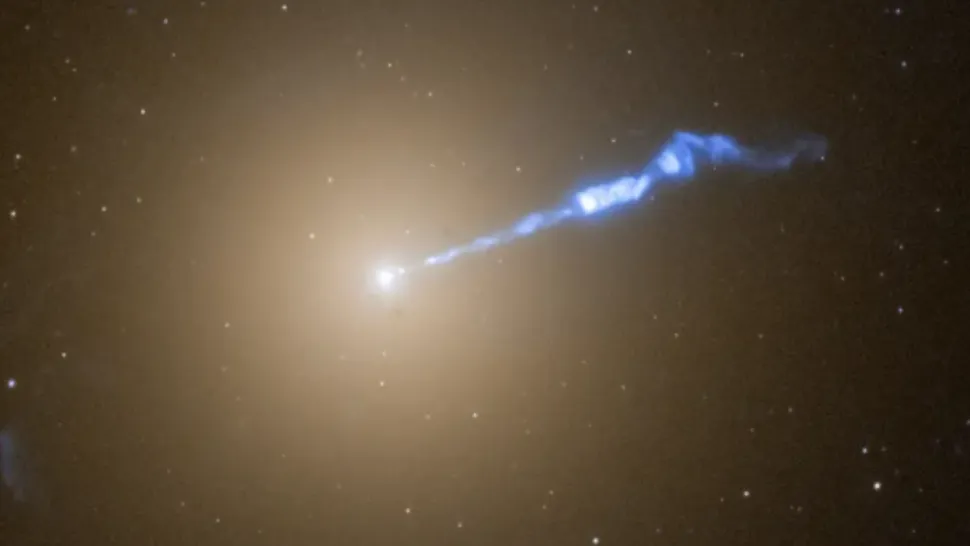
The most incredible part of this discovery isn't just what they saw, but how they saw it. No single telescope on Earth was powerful enough to capture this image alone. Instead, scientists used Very Long Baseline Interferometry (VLBI) to virtually link radio telescopes across the globe, from Europe to Antarctica, turning the entire Earth into one giant eye.
This success proves a fundamental truth that drives us here at SkyMapper: We see more when we look together.
The Power of the Network
The M87* discovery was a triumph of networked astronomy. It showed that when you synchronize instruments worldwide, you can achieve resolution and continuous coverage that massive, singular observatories simply can’t match.
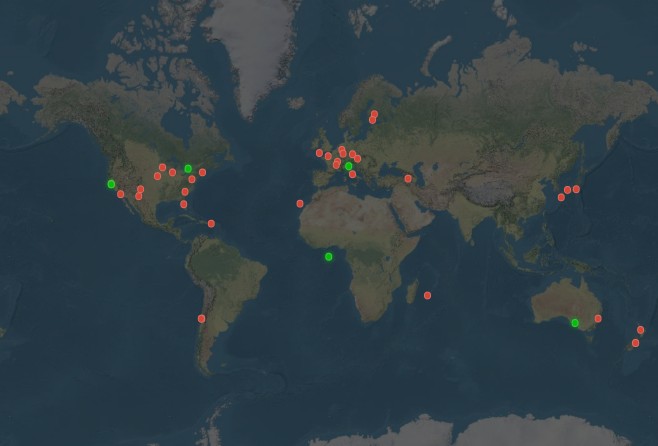
At SkyMapper, we are taking this exact philosophy and democratizing it. We are building the world’s first decentralized network of telescopes, but instead of being limited to a handful of professional radio dishes, we are connecting thousands of optical telescopes owned by amateur astronomers, schools, and citizen scientists like you.
SkyMapper x SETI: Grounding the Science
Just as the global array grounded the observations of M87*, our strategic partnership with the SETI Institute is grounding the science of amateur observation.
While the James Webb Space Telescope (JWST) looks billions of years into the past, SkyMapper and SETI are focused on the "Now", the dynamic, changing universe happening right this second.
Through our partnership, SkyMapper users aren't just taking photos of the moon; they are feeding data into real scientific pipelines. By connecting your telescope to the SkyMapper network via SkyBridge, you become a node in a global array that helps professional scientists hunt for:
- Transient Events: Supernovae, gamma-ray bursts, and fast-moving asteroids that appear and vanish in the blink of an eye.
- Technosignatures: As part of our work with SETI, our network scans for brief optical flashes that could be potential signals from other civilizations, teaching us that the search for life requires constant, global vigilance.
- Planetary Defense: Tracking Near-Earth Objects (NEOs) such as asteroids and space junk that require continuous monitoring from multiple angles on Earth to determine their orbits.
Your Turn to Make History
The M87* image reminds us that astronomy is entering a new era. It is no longer the solitary pursuit of a lone observer on a mountain. It is a collaborative, global effort.
You may not have a radio dish in your backyard to image a black hole, but you have something equally vital: a view of the sky that no one else has. When you join the SkyMapper network, your backyard telescope becomes part of a "planet-scale" instrument.
Whether you are a student, a hobbyist, or an educator, the tools to contribute to professional science are now in your hands. The professionals have their networks; now, thanks to SkyMapper and SETI, the rest of us have ours.
Ready to turn your telescope into a tool for discovery? Join the SkyMapper Network today and lets start mapping the universe, together.
SZ3 2026