The universe is a stage for spectacular events, and few are as dramatic or significant as a supernova, the explosive death of a star. In recent weeks, headlines have been dominated by an incredible discovery that pushes the boundaries of cosmic archaeology.
What is a Supernova?
A supernova is the most powerful and luminous explosion in the cosmos, briefly outshining an entire galaxy. It marks the final, catastrophic end for certain stars.
There are two main ways a supernova can occur:
- Core-Collapse Supernova: This happens when a massive star (at least eight times the mass of our Sun) runs out of nuclear fuel. The core collapses under its own immense gravity in mere seconds, creating a shockwave that violently blasts the star's outer layers into space.
- Type Ia Supernova: A runaway thermonuclear explosion is triggered when a dense white dwarf star in a binary system accretes so much material from its companion that it exceeds the 1.44x solar mass threshold, known as the Chandrasekhar limit. This catastrophic event results in the star's complete obliteration.
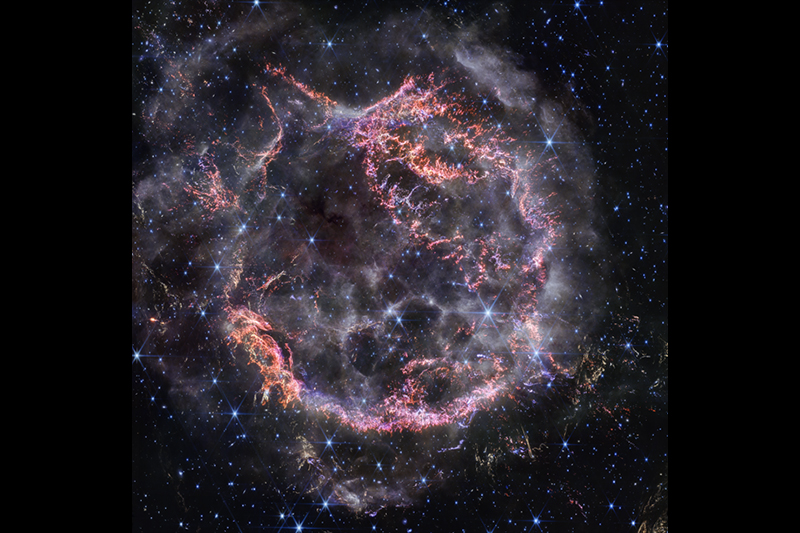
These explosions are crucial to life itself, as they are the primary source for creating and distributing most of the elements heavier than iron, including the calcium in your bones and the iron in your blood, across the universe.
How Often Do They Occur?
While a supernova in our own Milky Way galaxy is rare, astronomers estimate one occurs only about once or twice every century (and most are hidden by interstellar dust), the universe as a whole is a more active place.
Due to the countless billions of galaxies in the observable universe, scientists estimate that a supernova explosion is actually happening somewhere in the universe roughly every second!
Peering into the Past with JWST
The astronomical community is buzzing with the news that the James Webb Space Telescope (JWST) has reportedly detected the oldest supernova ever seen. This incredible finding, which looks back billions of years to the early universe, provides an unprecedented window into the composition and evolution of the first stars and galaxies.
The sheer distance and faintness of such an ancient explosion underscore the phenomenal light-gathering and infrared capabilities of the JWST. You can read more about this groundbreaking observation here: NASA’s Webb Identifies Earliest Supernova to Date, Shows Host Galaxy.
SkyMapper: Mobilizing the Global Hunt
While JWST focuses its unparalleled power on the deep, distant cosmos, the mission to monitor the nearby universe requires a different kind of network: one that is agile, persistent, and globally distributed. This is where SkyMapper's network, powered by advanced technology and a dedicated community of citizen scientists, plays a vital role.
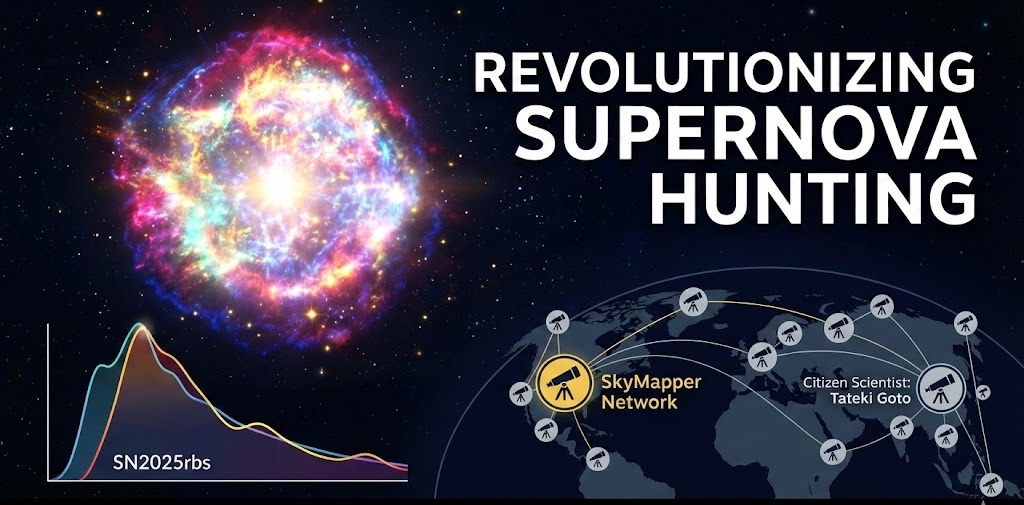
Our integrated telescope network is designed to detect and track these unpredictable cosmic cataclysms as they happen in our local cosmic neighborhood. The image below offers a perfect illustration of this capability:
Supernova SN2025rbs
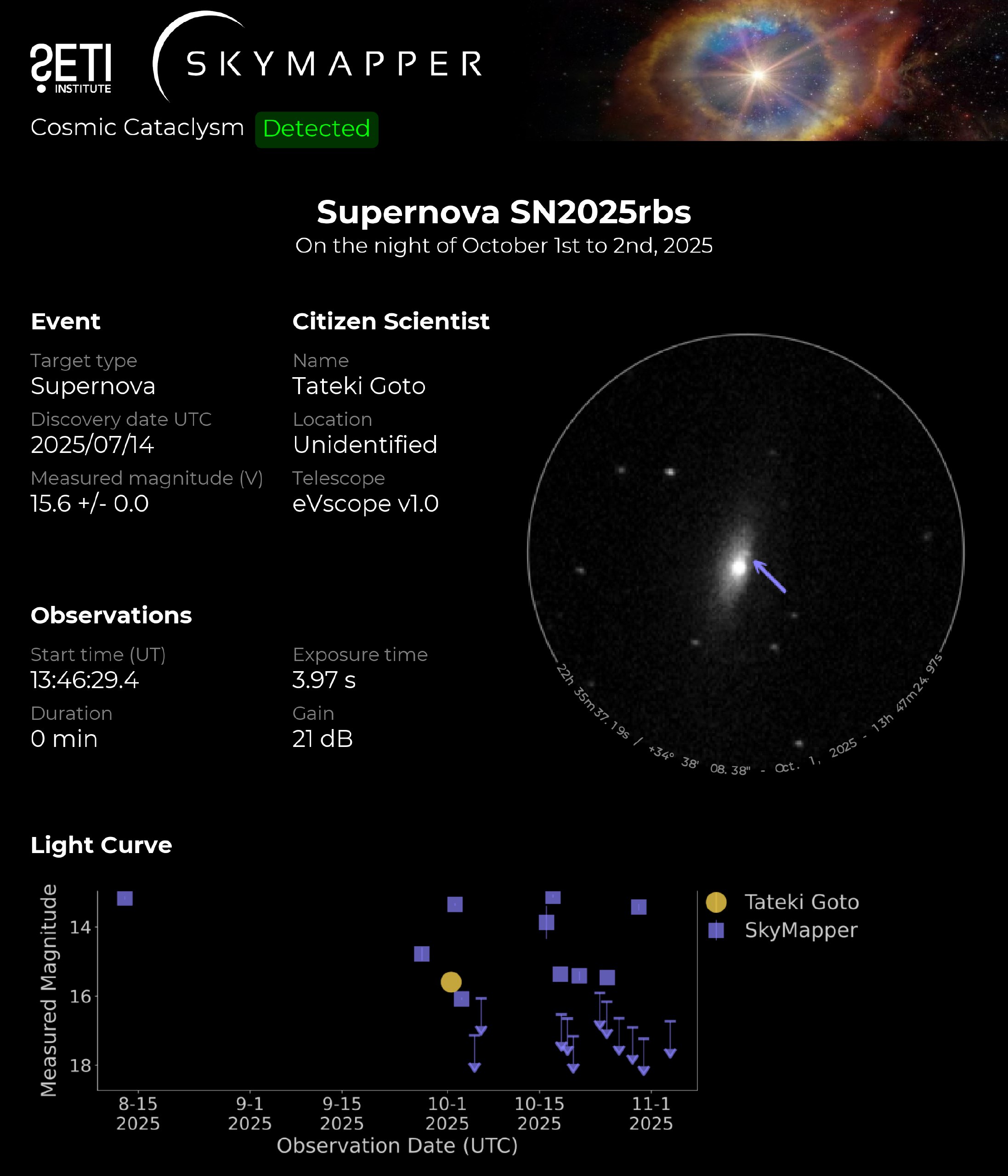
On the night of October 1st to 2nd, 2025, a Cosmic Cataclysm was detected within the SkyMapper network. This discovery of Supernova SN2025rbs was made by citizen scientist Tateki Goto using a Discovery Class scope.
The critical power of our platform is highlighted in the light curve provided. This chart shows the supernova's brightness over time, demonstrating how observations from the initial detector (Tateki Goto) were quickly supplemented and confirmed by data from the central SkyMapper system. This seamless, rapid integration of amateur and professional-grade data is essential for understanding the evolution of a newly detected supernova.
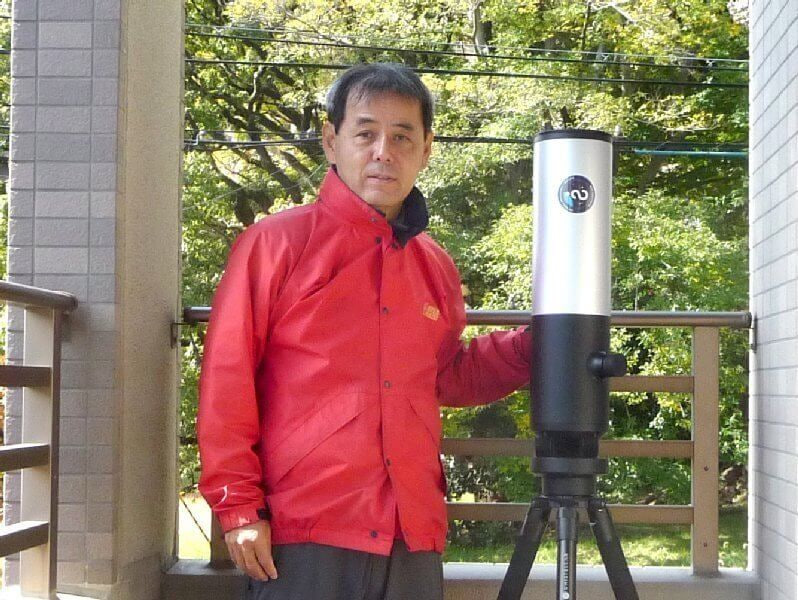
The combination of sophisticated processing and a widespread network ensures that no supernova in our observable sky goes unnoticed. Every successful detection by a citizen scientist like Tateki Goto proves that you don't need a billion-dollar space telescope to contribute meaningful, real-time data to astronomical research.
Join the Revolution
From the billion-year-old light captured by JWST to the real-time explosions monitored by SkyMapper's community, the golden age of transient astronomy is here. We invite you to join the SkyMapper network and become part of the distributed global effort to watch over the cosmos, one supernova at a time.
SZ3 2025