October brings crisp autumn nights to our northern nodes and warming, clear skies to southern observers. This month features prime planetary geometry alongside rich deep-sky targets. With the Unistellar fleet (eVscope and eQuinox arrays) connected to our decentralized ledger, October 2026 is built for long, automated stacks and precision data capture.
Because the SkyMapper protocol bypasses lunar observations, our global network focuses on deep-space light-stacking, outer-planet oppositions, and high-velocity meteor trains. Calibrate your field orientation, check your power levels, and get ready to log this month's scientific targets.
1. The Headliner: Saturn at Opposition (October 3–4)
Visibility: Global (Visible All Night)
October kicks off with the main event: Saturn reaches opposition, placing the Ringed Planet directly opposite the Sun from Earth. It will shine at its absolute brightest of the year, remaining visible from sunset to sunrise.
- The View: With the rings tilted slightly open toward Earth, Saturn presents a remarkably crisp profile.
- Unistellar Advantage: Switch your app to high-framerate planetary processing to capture shadow detail on the gas giant's surface.
- Smart-Scope Tip: Use brief tracking intervals during steady atmospheric seeing to resolve the dark Cassini Division and track Titan and neighboring moons as they orbit the planet.
2. Northern Hemisphere Spotlight: The Triangulum Galaxy (M33)
Visibility: Northern Hemisphere & Tropics (High Overhead at Midnight)
Around the New Moon on October 10, dark skies provide ideal conditions for deep-sky imaging. Northern nodes are directed to lock sensors onto the constellation Triangulum to map Messier 33 (The Triangulum Galaxy).
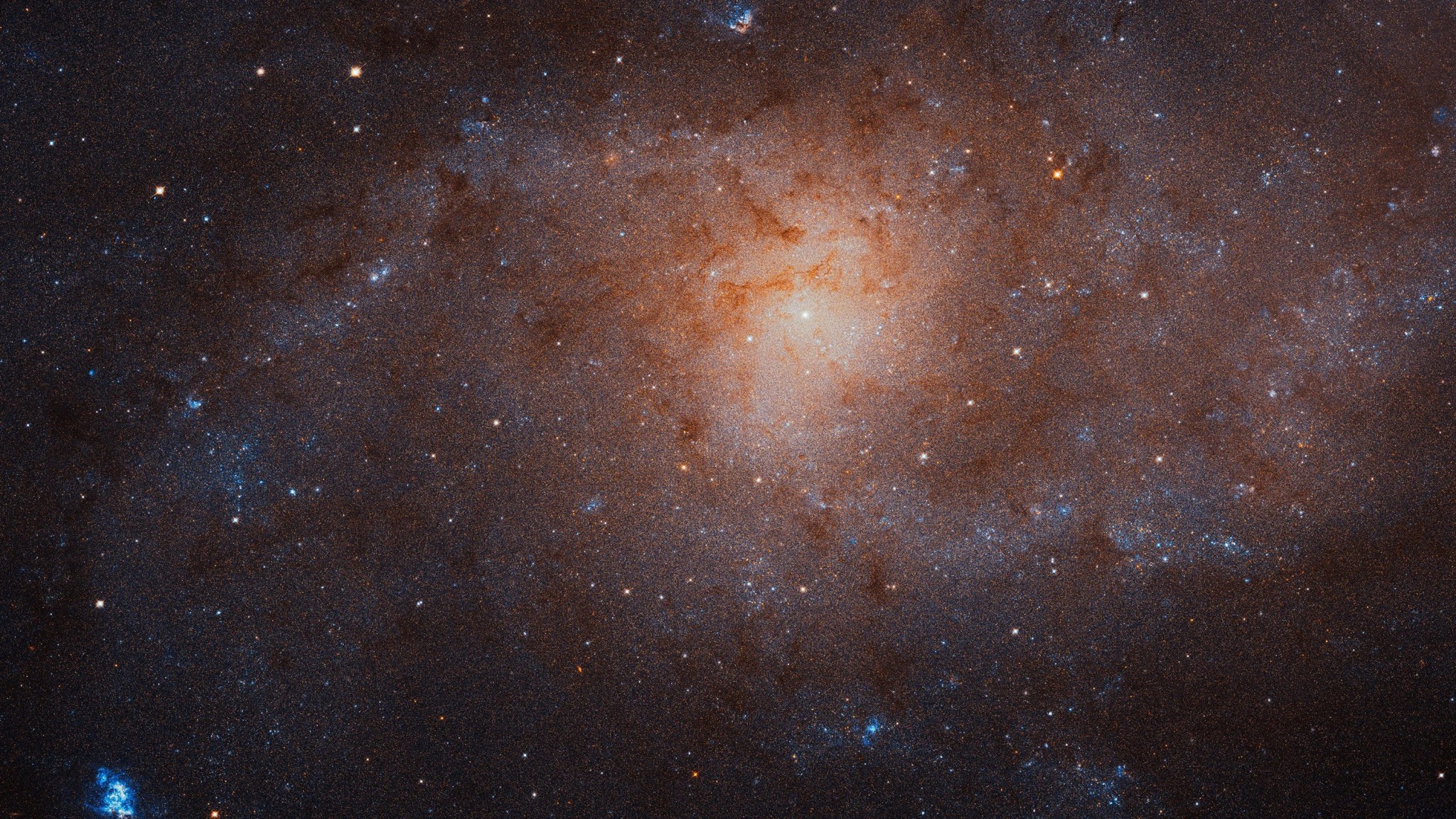
- The Target: A face-on spiral galaxy roughly 2.7 million light-years away, known for its sprawling, star-forming H II regions (like NGC 604).
- Unistellar Advantage: M33 can be notoriously difficult due to low surface brightness. However, Enhanced Vision mode stacks photons continuously, revealing subtle blue spiral arms and reddish star-forming knots.
- The Grid Mission: Run an extended Enhanced Vision session (45 to 60 minutes) to resolve faint outer dust structures for the SkyMapper composite catalog.
3. Southern Hemisphere Spotlight: The Small Magellanic Cloud & 47 Tucanae
Visibility: Southern Hemisphere (High Overhead)
Southern Hemisphere observers have access to a double feature in the southern sky: the Small Magellanic Cloud (SMC) and the massive globular cluster 47 Tucanae (NGC 104) sitting right beside it.
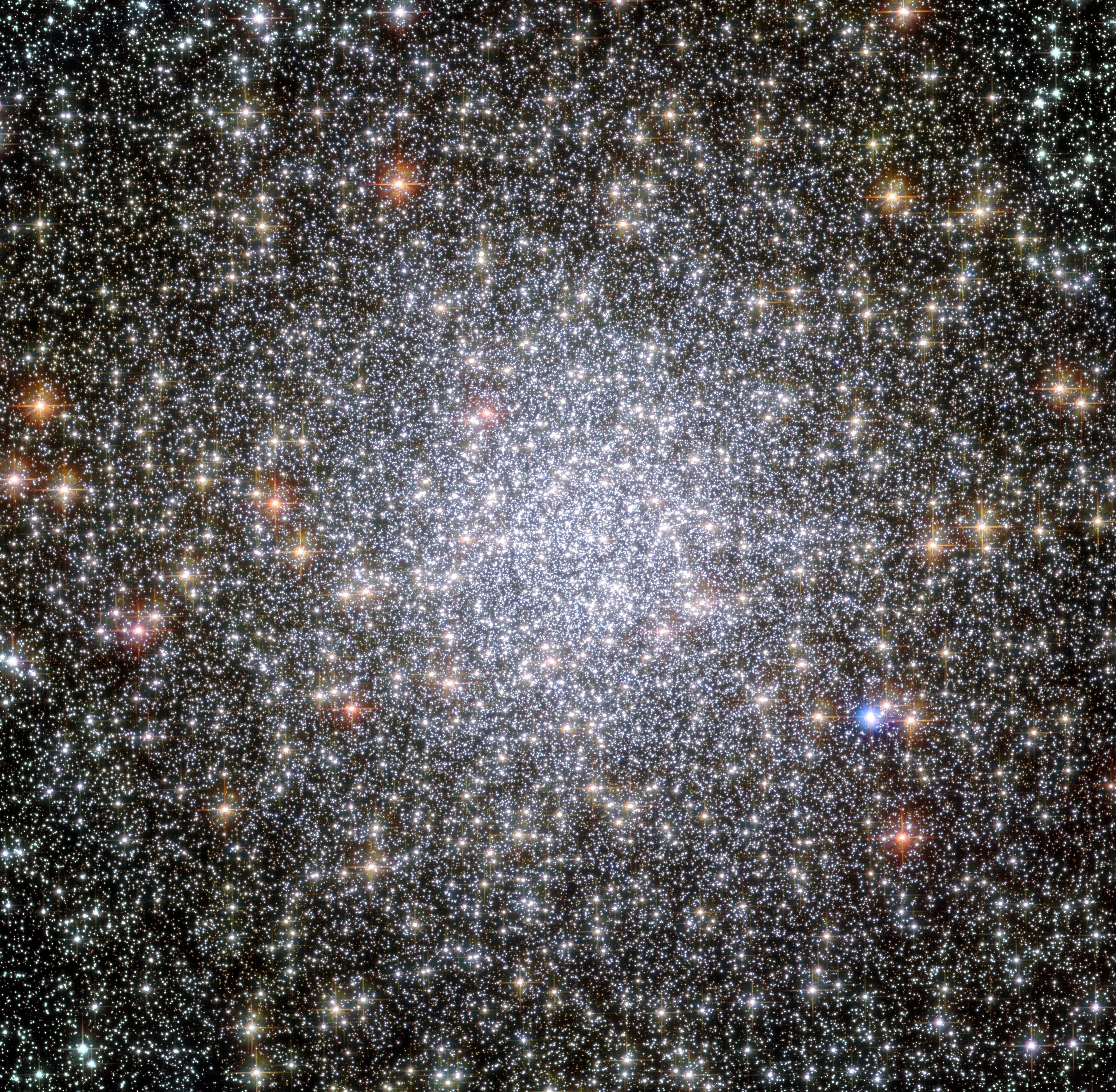
- The Target: A dwarf irregular satellite galaxy paired with one of the most brilliant, tightly bound globular star clusters in the night sky.
- Unistellar Advantage: The deep contrast algorithms on your eVscope or eQuinox will resolve thousands of individual stellar points right into the dense, brilliant core of 47 Tucanae, while capturing the delicate star fields of the SMC background.
4. High-Speed Transient Tracking: The Draconid & Orionid Meteor Showers
Visibility: Global (Draconids: Oct 8–9 | Orionids: Oct 21–22)
October features two meteor showers. The Draconids peak on October 8–9 under nearly moonless skies, followed by the high-speed Orionids (debris from Halley’s Comet) peaking on October 21–22.
- The View: Fast-moving meteors zip across the sky, frequently leaving behind ionized dust trails.
- Unistellar Tip: Focus your smart scope on rich star fields surrounding the shower radiants (Draco or Orion). Continuous short-exposure runs allow network nodes to capture persistent meteor trains, capturing upper-atmospheric drift data.
5. Pre-Dawn Target: Jupiter Shadow Transits (Early October)
Visibility: Global (Visible in the East Before Dawn)
As Jupiter rises higher during the early morning hours in Gemini, it offers opportunities to track Galilean moon interactions.
- The Target: On the morning of October 5, watch for a double-shadow transit across Jupiter's cloud tops.
- Smart-Scope Tip: Use short exposures in planetary mode to track the dark round shadows of Io and Ganymede as they move across Jupiter's equatorial belts.
The October Network Directive: Map the Core
Between Saturn's opposition, face-on spiral galaxies, and pre-dawn Jovian transits, October presents an active operational window for our network.
- Automated Data Contribution: Stack light frames of M33, 47 Tucanae, or Saturn to automatically log verified tracking data to the SkyMapper ledger.
- Clouded Out? If autumn weather blocks your view, log into the SkyViewer portal to stream live stacked data broadcasted by active nodes worldwide.
Check your tripod, launch your app, and let’s map the autumn sky together.
Clear skies!
— The SkyMapper Team