
The promise of the night sky has always been one of clarity and the unknown. But a groundbreaking new study published in Nature has confirmed what many astronomers have feared: our window into the universe is rapidly becoming a cage of light.
The article, titled "Satellite megaconstellations will threaten space-based astronomy" (Borlaff et al., 2025), presents a sobering forecast for the future of space exploration. At SkyMapper, where our mission is to map the sky and track orbital objects in real-time, we believe this data is a wake-up call for the entire space industry.
The Findings: A Crowded Orbit
The study modeled the impact of the rapidly growing population of Low Earth Orbit (LEO) satellites, often referred to as "megaconstellations", on major space observatories. The results are startling:
- Hubble Space Telescope: Over 39% of its exposures are expected to be contaminated by satellite trails as constellation populations reach 560,000+.
- Future Missions (SPHEREx, ARRAKIHS, Xuntian): The outlook is even more dire. The study predicts that more than 96% of exposures from these wide-field survey missions will be marred by bright satellite streaks.
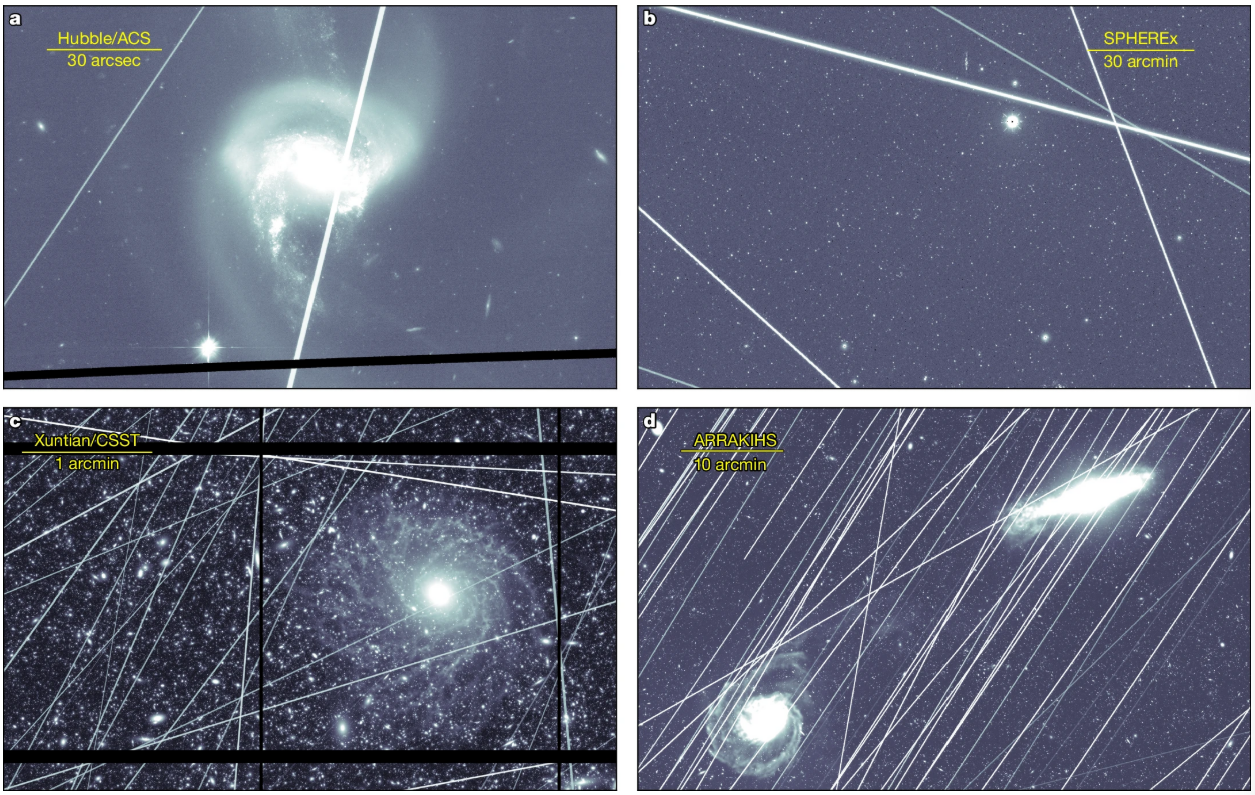
As companies race to launch hundreds of thousands of new satellites for global internet coverage, the "pristine" environment of space is becoming as congested as a city highway.
Why This Matters
For decades, we launched telescopes into space to escape the blurring effects of Earth's atmosphere. Now, we face a new iron curtain of our own making. These satellite trails don't just ruin pretty pictures; they obliterate scientific data, hide potentially hazardous asteroids, and hinder our ability to study the early universe.
The SkyMapper Perspective: Tracking is the First Line of Defense
At SkyMapper, we stand at the intersection of astronomy and space safety. While the Nature study focuses on the threat to scientific instruments, it underscores a critical reality: we need to know exactly what is up there, every second of the day.
This is where SkyMapper’s decentralized global telescope network plays a pivotal role.
- Independent Verification: As orbit becomes more crowded, relying on a single source of truth for satellite positions is no longer sufficient. Our network of ground-based telescopes, powered by SkyBridge and SkySphere, provides continuous, decentralized verification of orbital objects.
- Collision Risk Assessment: With hundreds of thousands of new objects, the risk of collisions (the Kessler Syndrome) grows exponentially. SkyMapper’s infrastructure is built to "Assess Risk of Collisions" by tracking these objects in real-time and immutable recording that data on the blockchain.
- Dynamic Observation Planning: To save astronomy, we must adapt. By maintaining a precise, real-time map of satellite positions, astronomers can schedule observations during rare windows of clarity, dodging the heavy traffic that our network detects.
A Call for Sustainable Space
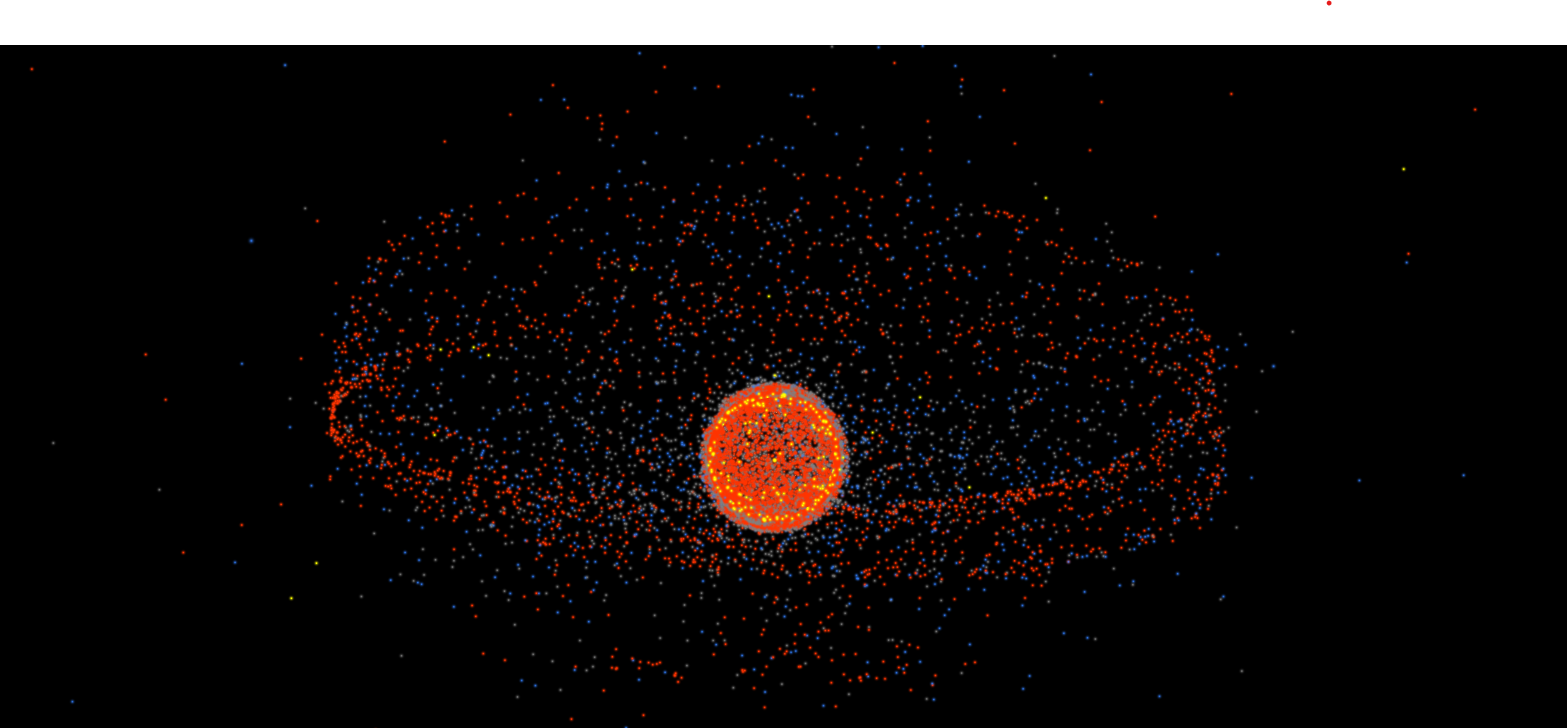
Connectivity is vital, but so is our heritage as explorers of the cosmos. The findings by Borlaff et al. highlight that the "big sky" theory, that space is too big to fill up, is officially dead.
We are building SkyMapper not just to observe the stars, but to navigate this new, crowded frontier. By democratizing access to sky data and ensuring every satellite and debris interact is tracked and verified, we are helping to secure a future where technology and astronomy can coexist.
Read the full article in Nature: Satellite megaconstellations will threaten space-based astronomy
Contact us to learn more about how SkyMapper is working around the megaconstellation dilemma.
SZ3 2025