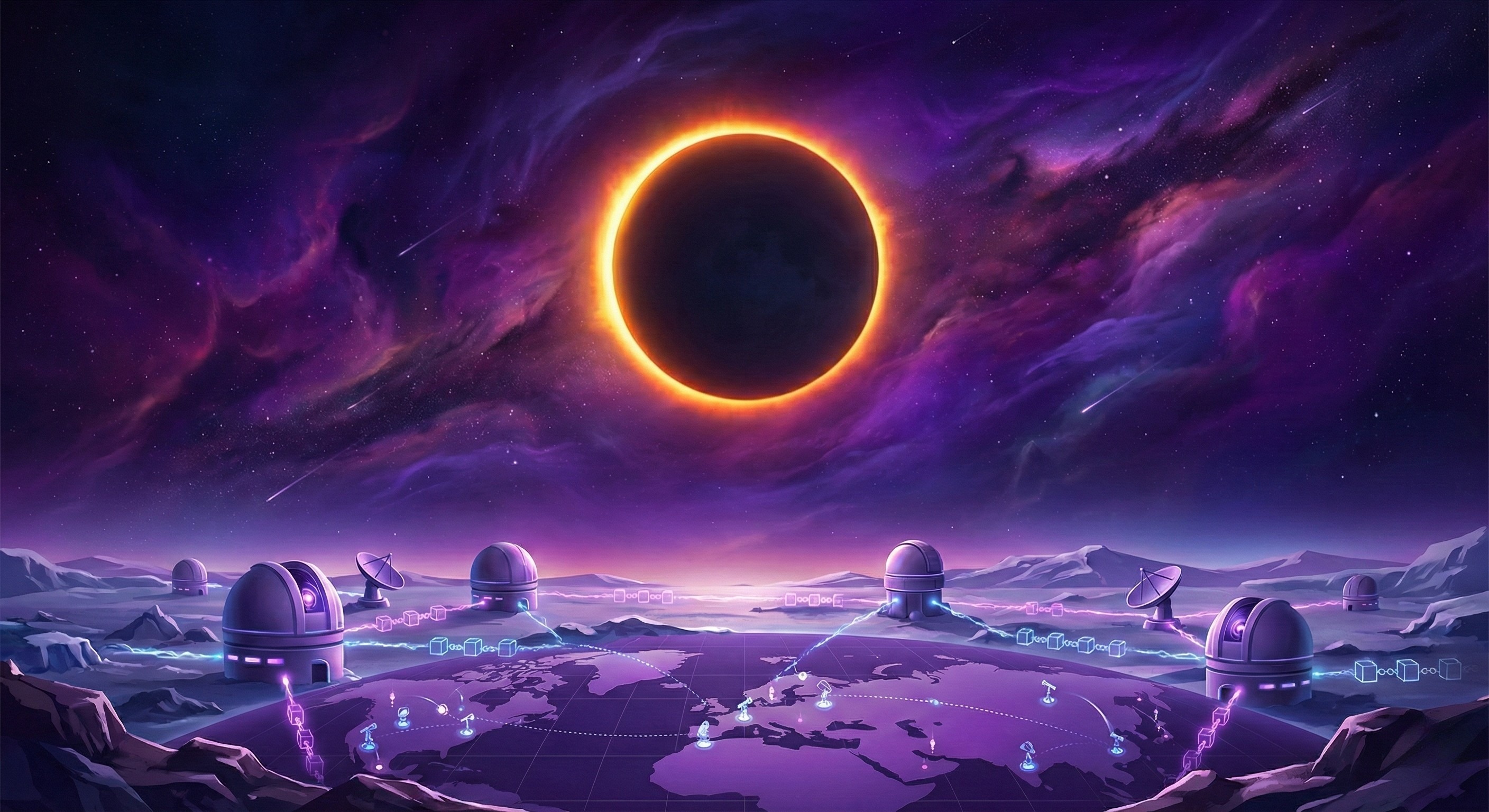
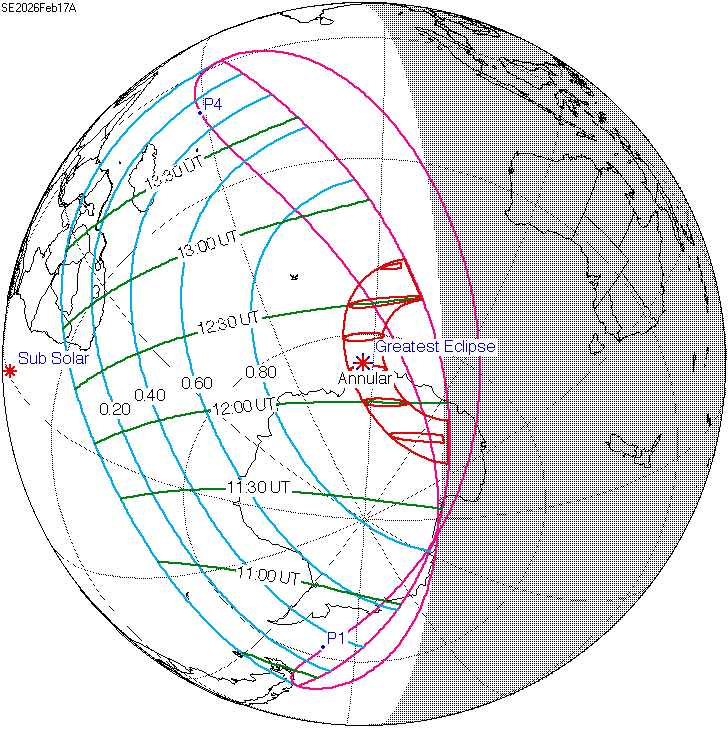
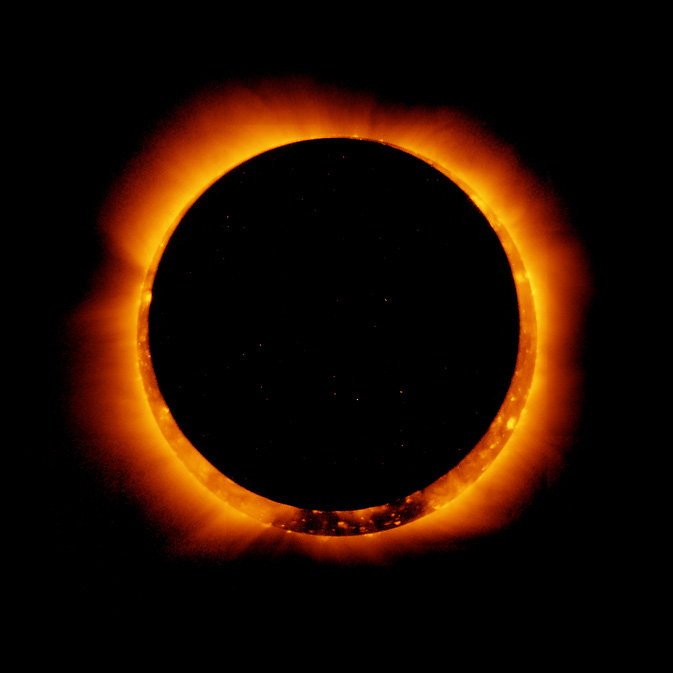
On February 17, 2026, the sky over Antarctica will ignite. A perfect "Ring of Fire", an annular solar eclipse, will blaze over the frozen continent. It promises to be one of the most spectacular astronomical events of the decade.
The catch? Almost no one will be there to see it.
Current estimates suggest that only about 16 people, researchers stationed at the Concordia and Mirny bases, will be in the direct path of annularity. While a partial eclipse will graze the southern tips of Africa and South America, the main event belongs to the penguins and a handful of scientists braving temperatures that can plunge to -80°C.
At SkyMapper, we often talk about the joy of observing from your own backyard. But when a celestial event happens in the most remote place on Earth, it begs an important question:
If a tree falls in the forest, or if the moon blocks the sun over Antarctica, does it still matter?
The answer is a resounding yes. Here is why tracking these remote phenomena is critical for professional astronomers and citizen scientists alike.
Science Doesn't Stop at the Horizon
Just because we can’t set up our tripods there doesn’t mean the data is lost. Every solar eclipse offers a stress test for our celestial mechanics. Predicting the exact path of the moon’s shadow across Antarctica requires incredible orbital precision. When those 16 researchers confirm the timing of the eclipse, they aren’t just sightseers; they are validating the mathematical models that help us navigate spacecraft and track satellites.

Furthermore, eclipses create unique atmospheric conditions. The sudden drop in solar radiation can cause "eclipse cooling," which occasionally disrupts cloud formations. Understanding how our atmosphere reacts to these rapid changes, even in the Antarctic wasteland, helps refine global climate models.
The Power of the Network
This Antarctic eclipse highlights a reality of modern astronomy: it is a global team sport. Professional observatories and remote research stations act as the anchor points, but they leave massive gaps in coverage.
This is where you come in.
While you might not be at Concordia Station this February, the next major event might pass right over your roof. The data collected by professional organizations is powerful, but it is often sparse. Citizen science networks fill in the map. When thousands of amateur astronomers upload data, images, or even simple timing observations from their backyards, they turn a local event into a global dataset.
Science in Sync: The SkyMapper x SETI Institute Advantage
This philosophy of "strength in numbers" is the driving force behind SkyMapper’s partnership with the SETI Institute. Through our collaboration, we are able to move beyond casual stargazing into coordinated observation campaigns.
By synchronizing the efforts of partnerships, like the one with SETI, observers around the globe, can effectively turn thousands of smaller telescopes into a single, planet-sized scientific instrument. Whether triangulating the position of a Near-Earth Asteroid for planetary defense or monitoring the transit of an exoplanet to help SETI scientists characterize distant worlds, these campaigns prove that we don't need a multi-billion dollar observatory to make a difference. SkyMapper provides a platform, SETI provides the science, and you provide the critical data that propels astronomy forward.
Bringing the Universe Home
We track events like the 2026 Antarctic Eclipse not just for the science, but for the perspective. It reminds us that we are on a planet that is constantly in motion, aligning with its neighbors in a clockwork dance that continues whether we are watching or not.
For the backyard astronomer, this event is a call to readiness. The technology that allows us to stream a live feed from an Antarctic base is the same technology that allows you to share your astrophotography with the world. We are entering an era where the line between "professional" and "amateur" is blurring. You don't need a government grant to contribute to science; you just need clear skies and curiosity.
So, on February 17, take a moment to think of those 16 researchers shivering on the ice, watching the Ring of Fire. They are the eyes of humanity for this event. But for the next one? That might be you.
Clear skies and keep looking up!
Ready to join the next campaign? Check out the latest at SkyMapper.io.
SZ3 2026