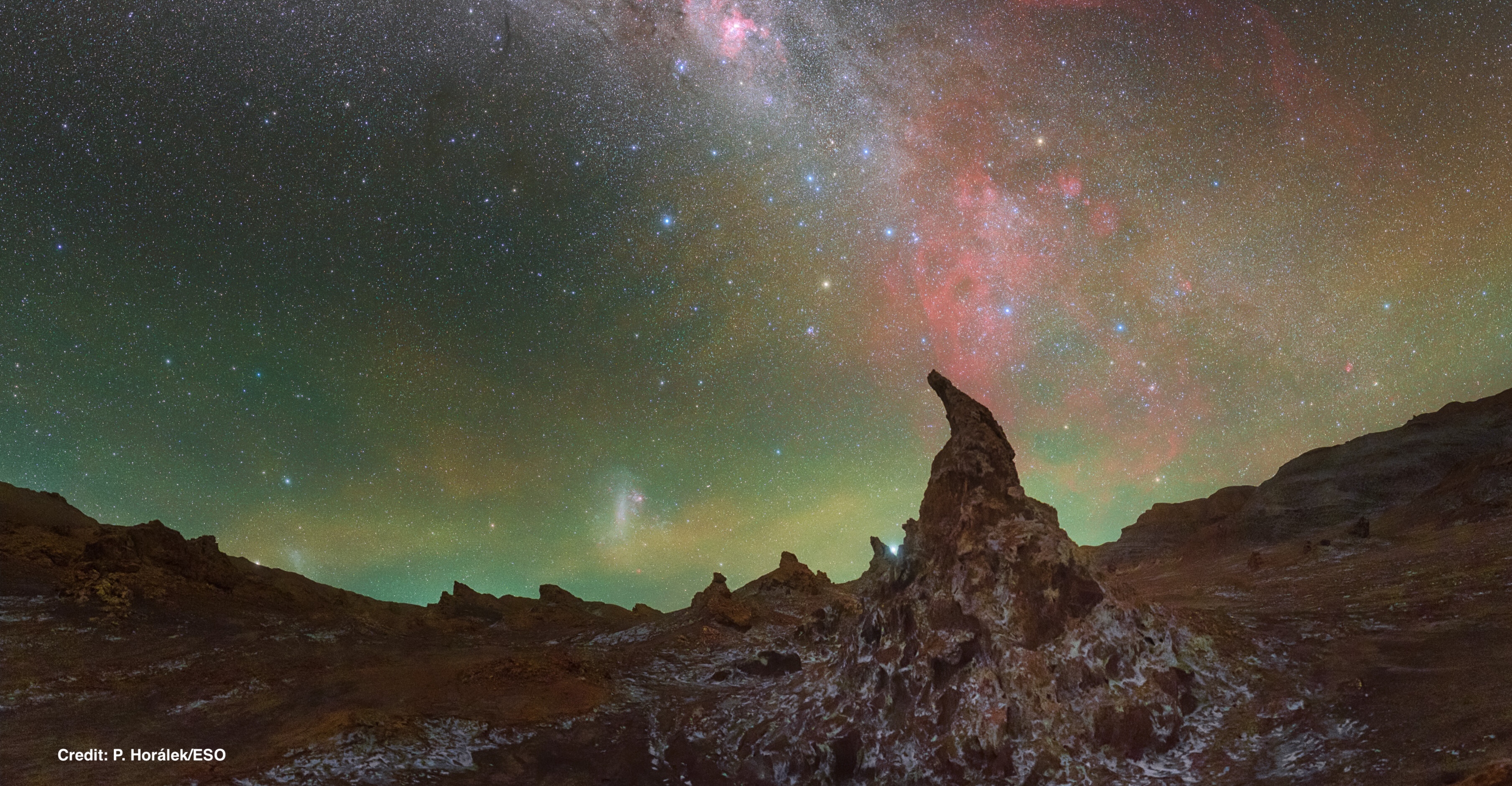
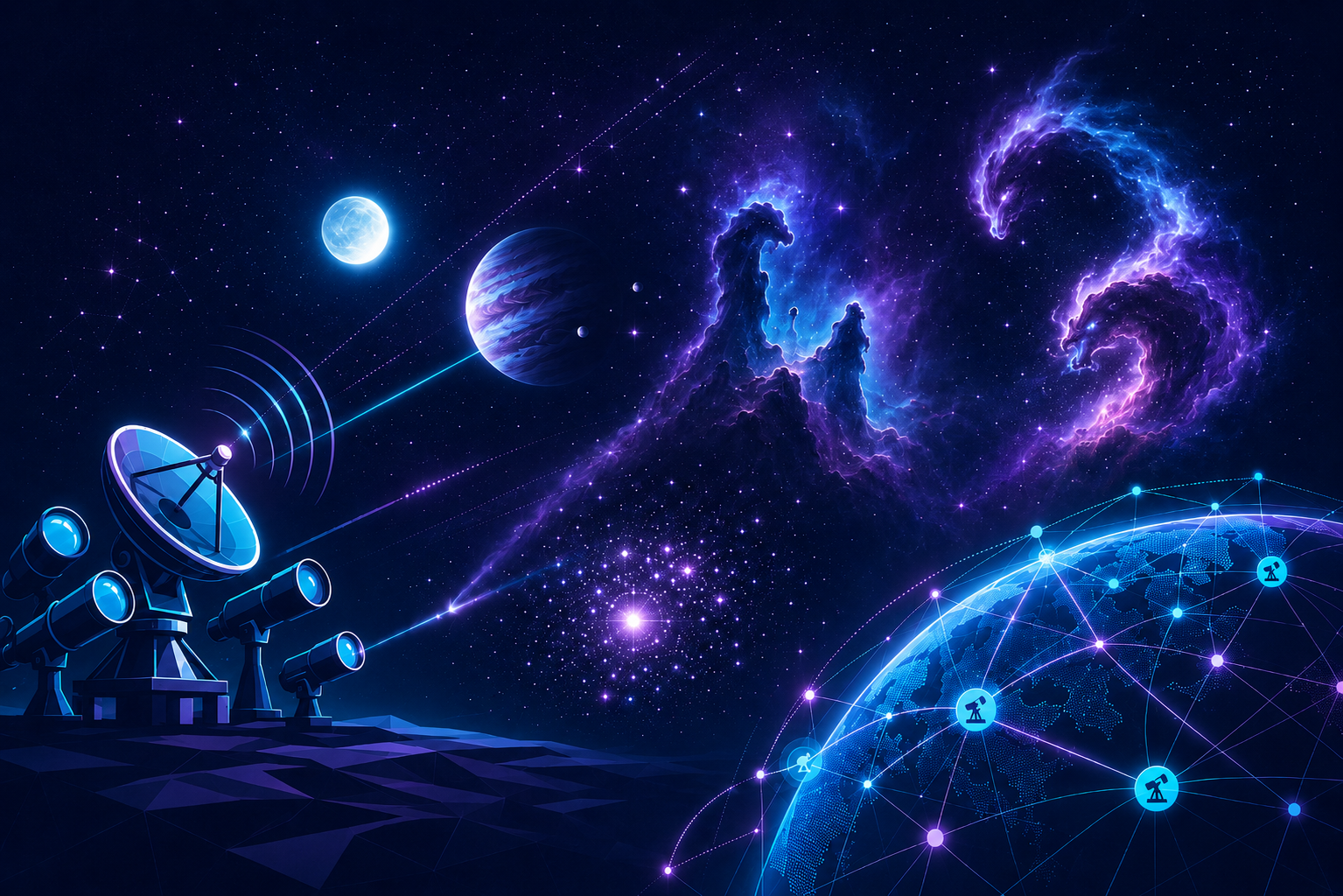
The June solstice is here, bringing the shortest nights of the year to our Northern Hemisphere nodes and the longest, darkest tracking windows to our Southern Hemisphere observers. Because the SkyMapper network is strongly supported by Unistellar telescopes (eVscope and Odyssey fleets) that excel at bypassing urban light pollution and stacking photons automatically, this month’s lineup is fully actionable no matter where your tripod is leveled.
We are leaving behind the open clusters of spring and diving straight into the deep end: brilliant planetary pairings, high-contrast emission nebulae, and ancient star cities. Uncover your optics, boot up the app, and prepare to capture these top targets for the SkyMapper ledger.
1. The Headliner: The Ultra-Close Venus-Jupiter Conjunction (June 7–10)
Visibility: Global (Low in the Western Horizon at Dusk)
Early June features an absolute showstopper. The two brightest planets in the solar system, Venus and Jupiter, are racing toward an unusually close encounter. They will be tight enough to be swept up together in wide-field binoculars, but your Unistellar scope will offer a spectacular framing of two completely different worlds.
- The View: Brilliant Venus will gleam at magnitude -4.0, while a slightly dimmer but massive Jupiter hangs right beside it, surrounded by its faint pinpricks of Galilean moons.
- Unistellar Tip: Because this happens low in the west just after sunset, use manual exposure controls to dial back the gain. This prevents the intense twilight glare and the brightness of Venus from overexposing Jupiter's delicate equatorial cloud bands.
2. Northern Hemisphere Spotlight: The Elephant’s Trunk Nebula (IC 1396)
Visibility: Northern Hemisphere (High in the Northeast)
With the New Moon arriving on June 14, dark-sky season is officially open for deep-space tracking. For our northern nodes, June marks the return of one of the finest smart-telescope targets in the cosmic catalog: the Elephant's Trunk Nebula in Cepheus.
- The Target: A dense, dark globule of interstellar dust and gas sculpted by the fierce stellar winds of a massive nearby star.
- Unistellar Advantage: This target is notoriously faint for traditional visual telescopes, but your Unistellar scope’s Enhanced Vision mode excels here. The automated stacking process will steadily pull the dark, twisting pillar out from the glowing red hydrogen background.
- The Grid Mission: Let your smart scope stack for at least 45 to 60 minutes. If you have a dual-band filter, slot it in to sharply define the ionized ridges where new stars are actively being born.
3. Southern Hemisphere Spotlight: "The Fighting Dragons" (NGC 6188)
Visibility: Southern Hemisphere (High Overhead)
While northern observers contend with short summer nights, our southern network nodes have massive, deep-dark winter windows. Your primary directive this month is NGC 6188, the spectacular Rim Nebula, often called the "Fighting Dragons of Ara."
- The Target: A chaotic star-forming complex where dark dust lanes bisect luminous, curved arcs of glowing gas, creating the unmistakable illusion of two mythical beasts locked in combat.
- Unistellar Advantage: This is an ideal target for a multi-night or long-duration mosaic stack. Short observations reveal the bright central arcs, but leaving your telescope integrating for an hour or more will map out the fainter, billowing clouds of cosmic dust along the borders. Your raw data streams will feed directly into our real-time, decentralized galactic mapping project.
4. Mid-Month Cosmic Cross-Over: Venus & The Beehive Cluster (June 19)
Visibility: Global (Best in the West after Sunset)
On the evening of June 19, Venus continues its busy month by tracking directly through the heart of Messier 44 (The Beehive Cluster) in the constellation Cancer.
- The View: This event offers a brilliant cosmic contrast. The intense, steady light of Venus will sit nestled inside an open cluster containing hundreds of young, glittering stars.
- Unistellar Tip: Select M44 in your Unistellar catalog just after twilight fades. Keep your exposure times short to prevent Venus from blooming across the image, allowing the individual cluster stars to shine cleanly alongside the planet.
5. Full Moon Resilience: The King of Globulars (June 29)
Visibility: Northern Hemisphere & Tropics (High Overhead)
When the Full "Strawberry Moon" arrives on June 29, standard deep-sky imaging pauses due to natural light pollution—but not for the SkyMapper fleet. We shift our focus to dense stellar arrays that cut right through the moonbeams: Messier 13 (The Great Hercules Cluster).
- The Target: A tightly bound ball of more than 300,000 ancient stars located 25,000 light-years away.
- Unistellar Advantage: The smart-stacking algorithms on your OdysseQuinox or eVscope will effortlessly filter out the ambient moonlight, resolving individual star points all the way into M13's blazing, dense core.
The June Network Directive: Map the Core
The rich, star-studded core of the Milky Way galaxy is rising earlier every night. Whether you are cutting through short northern twilight or settling into a crisp southern winter evening, your Unistellar telescope is a critical sensor node.
By locking onto NGC 6188 in the south or IC 1396 in the north, you are verifying data blocks and generating high-fidelity imagery for the global SkyMapper ledger. If local clouds block your view of the Venus-Jupiter meetup, simply jump onto the SkyViewer portal to check the real-time streams of other nodes tracking across the network.
The solstice is here, the fleet is online. Let's map the sky.
Clear skies!
— The SkyMapper Team
SZ3 2026