.jpg)
The space above us is getting crowded. With upward of 70,000 operational satellites projected to be in Low Earth Orbit (LEO) by 2030, the risk of collisions and orbital congestion is rising exponentially. Recognizing this, the aerospace and defense sectors are actively seeking innovative ways to monitor the skies. While traditional government initiatives are heavily investing in radio astronomy to track these assets, a new frontier of citizen science and Web3 infrastructure is emerging to complement these efforts.
The Science: Scaling Space Domain Awareness
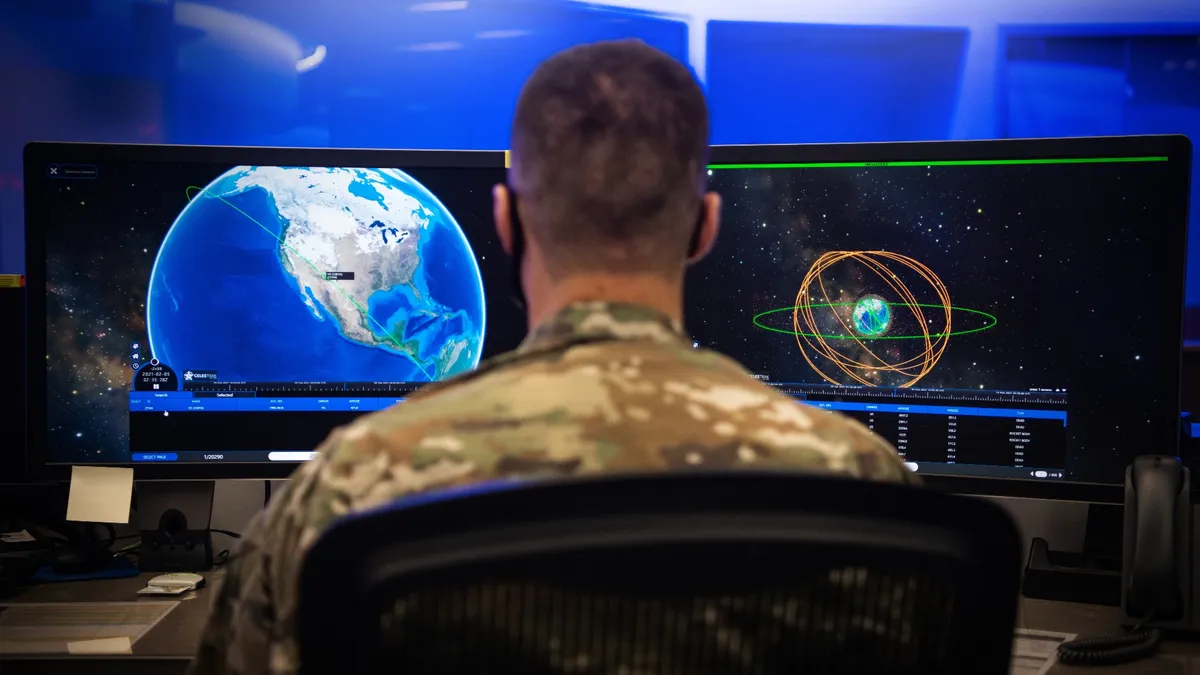
In June 2026, the U.S. Space Force awarded the University of Arizona an $8.6 million cooperative agreement to advance space domain awareness (SDA). The initiative, known as SURe (Strategic Space Technology Institute for Ultra-High-Resolution Imaging at Millimeter Wavelengths), aims to expand a ground-based network of radio antennas known as the Arizona Array.
The science relies on a principle called very long baseline interferometry. By networking multiple widely separated radio antennas to simultaneously observe the radio emissions of a satellite, researchers can synthesize highly detailed images that would otherwise require a massive, single telescope. This technology, traditionally used by universities to study distant cosmic objects like black holes, is now being turned toward Earth’s dynamic orbital environment to detect, monitor, and image satellites across Low Earth Orbit (LEO), Medium Earth Orbit (MEO), and Geosynchronous Orbit (GEO).
The SkyMapper Value: A Decentralized Optical Network
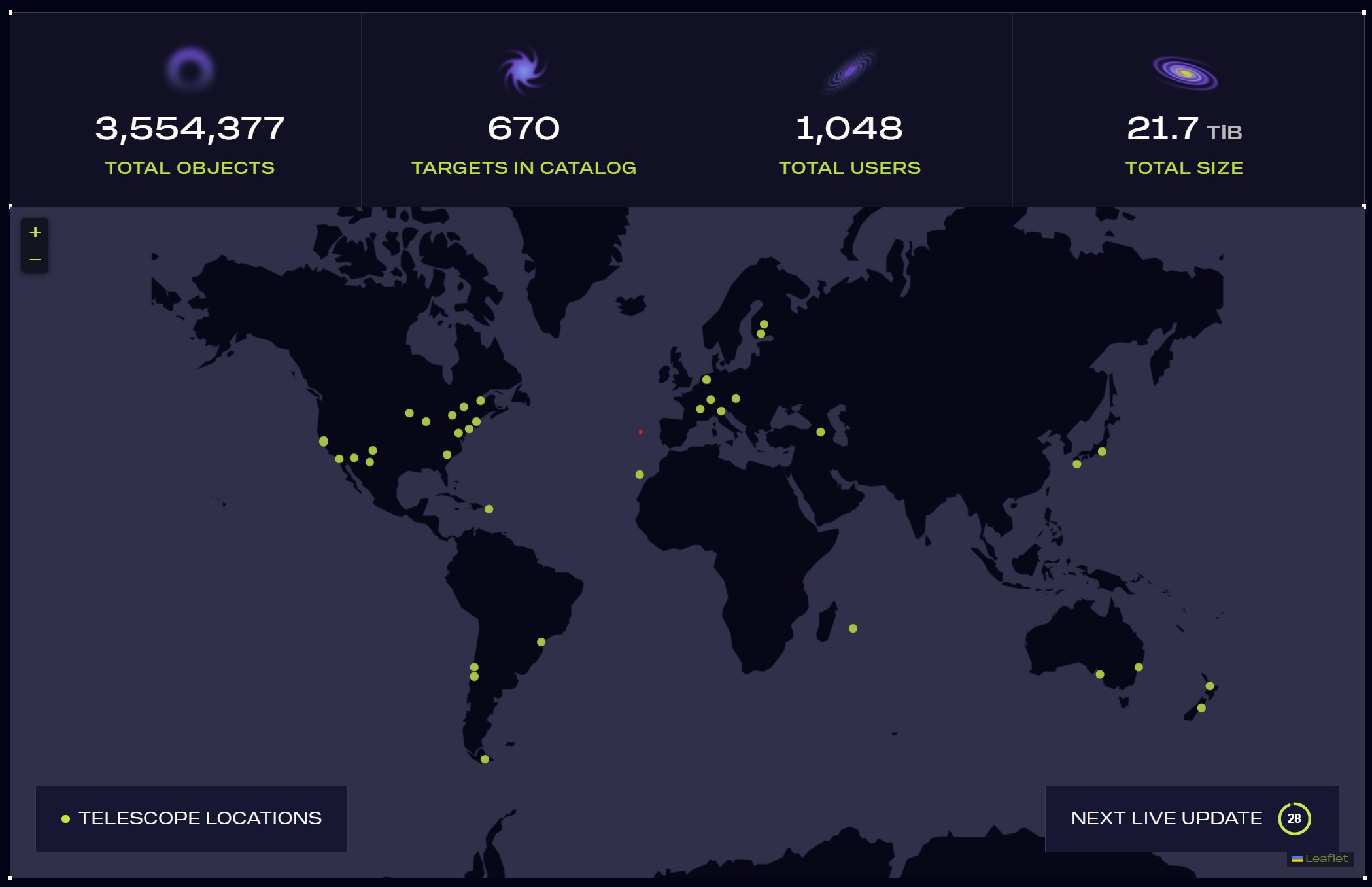
While high-level institutional grants focus on radio arrays, the SkyMapper network is tackling the same problem from an optical, democratized angle. SkyMapper operates as a Decentralized Physical Infrastructure Network (DePIN), connecting compatible telescopes and all-sky cameras globally to capture real-time optical observations.
Optical tracking provides a critical visual complement to radio telemetry. Through the SkyBridge device and the SkyViewer platform, both professional operators and citizen hobbyists can set their telescopes to track LEO satellites autonomously. This transforms isolated telescopes into a unified, planetary-scale tracking network capable of delivering continuous sky-to-space coverage.
Why the SkyMapper Network is Vital for the Future of LEO
Relying on a few central observatories often leaves critical gaps in observational data due to unpredictable weather or geographic limitations. SkyMapper overcomes this vulnerability by establishing a distributed global network. If one region is hindered by cloudy skies, operators can seamlessly access telescopes on the opposite side of the world, guaranteeing persistent and uninterrupted satellite tracking across the globe.
In an era where defense-grade trust is an absolute necessity, the network leverages Web3 technology to secure and verify this astronomical data. Every observation and satellite detection is assigned a cryptographic fingerprint, with its metadata indexed on a permissioned Avalanche Subnet. Supported by decentralized storage solutions like Akave, this infrastructure ensures that telemetry remains provable, tamper-resistant, and verifiably reliable for researchers, regulators, and satellite operators alike.
Beyond its technical capabilities, SkyMapper empowers the wider community by incentivizing citizen science. As users interact with the network to capture images, share data, and track satellites, they help build a sustainable, community-driven ecosystem. This grassroots engagement continuously expands humanity's collective capacity for space domain awareness, proving that everyday individuals can play a vital role in securing our orbital environment.
A Collaborative Vision for Orbital Safety
As our reliance on LEO infrastructure grows, ensuring a safe and sustainable orbital environment demands both institutional innovation and grassroots participation. While massive arrays like SURe bring unparalleled radio clarity, the global optical coverage and decentralized trust of SkyMapper offer an equally critical layer of awareness. Securing the future of our skies isn't just a job for space agencies anymore, it is a collaborative effort open to anyone with the right tools. To discover how you can track satellites, observe deep space, and contribute verifiable data, launch the SkyViewer platform today, and explore how industry leaders are supporting this mission by visiting SkyMapper Partners.
sz326