The era of lunar human exploration has returned. Following the success of Artemis I, NASA is now preparing for Artemis II, the first crewed mission to the vicinity of the Moon in more than half a century.
That makes this more than a milestone for NASA. It is also the kind of public observing moment that shows why SkyMapper exists.
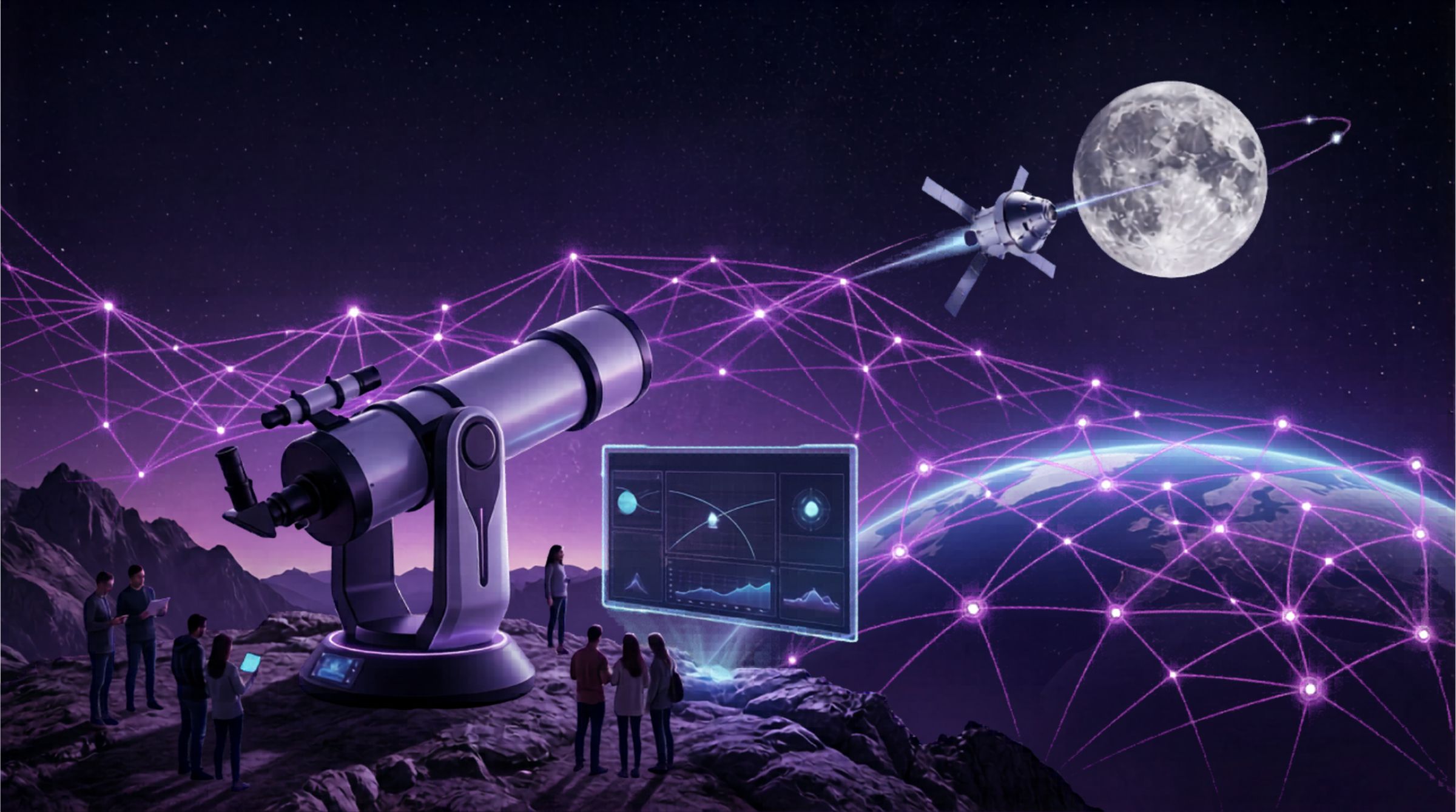
As SkyMapper launches the and opens SkyViewer to the public, Artemis II offers a powerful demonstration of what a globally connected telescope community can do: observe, secure, and share the sky in real time. Across the mission, NASA’s Deep Space Network will communicate with Orion by radio, while ground-based optical observers around the world will take on a different challenge altogether, visually tracking a spacecraft on its way to deep space. This is where SkyMapper’s growing network of connected telescopes and public-facing observing tools come into focus and positions SkyMapper as a decentralized global telescope network and SkyViewer as the interface to control telescopes, track satellites, and capture images.
At SkyMapper, we are obsessed with what can be seen from the ground. Whether you are a professional Space Domain Awareness operator, an advanced observer, or a new user discovering the sky through SkyViewer, tracking Orion on its journey toward the Moon is a vivid example of what becomes possible when a global network can respond together.
Why Optical Tracking Matters
In an age of advanced radar, telemetry, and radio communications, it is fair to ask: why point telescopes at Artemis II at all?
Because optical tracking provides an independent layer of truth. Radio tells us where a spacecraft reports itself to be. Optical observations help confirm where it actually appears in space. For public audiences, that is also part of the power of the SkyMapper launch: opening access to the visual side of space operations, not just the abstract data behind them.
Optical tracking can support:
Trajectory verification: Optical observations can help refine orbital determination for Orion and confirm that it is following its intended path.
Object separation: When Orion separates from the ICPS, optical systems can help verify the event and distinguish the objects as they continue on different trajectories.
Space situational awareness: Visual monitoring can add context around the spacecraft’s surroundings and behavior, contributing to a broader understanding of mission conditions.
These are exactly the kinds of use cases that make the public launch of the SkyMapper Network timely. Internally, SkyMapper’s current messaging centers on making observations verifiable, accessible, and actionable across a distributed network.
The Challenge: Tracking a Moving Target in Deep Space
Tracking Artemis II is not like tracking the ISS. The ISS is bright, fast, and familiar. Orion will behave differently depending on where it is in the mission.

1. The High Earth Orbit phase
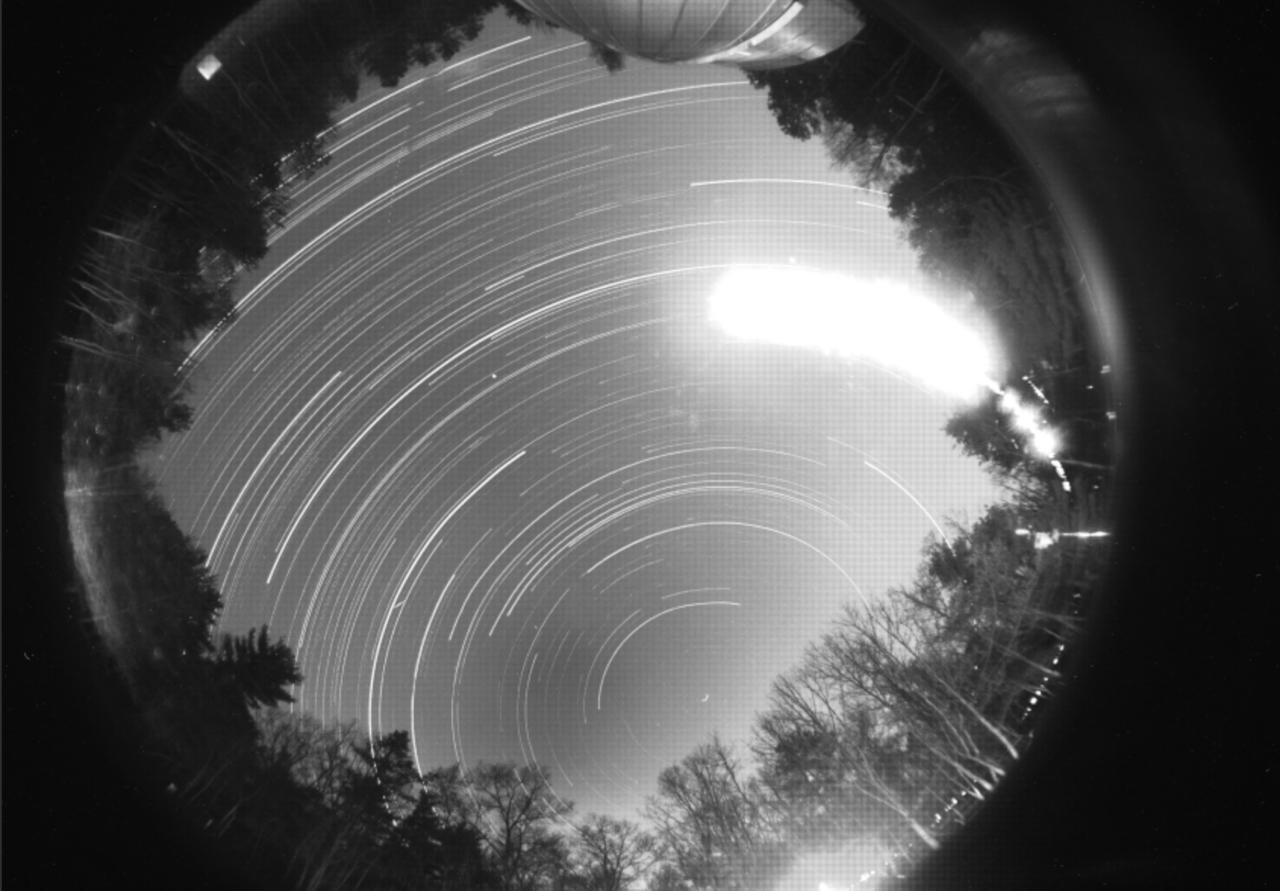
Early in the mission, Orion was brighter and moving more noticeably against the star field. Observers, depending on the device used, may choose sidereal tracking, keeping the stars fixed and letting the spacecraft streak, or satellite-rate tracking to follow the spacecraft directly.
2. The translunar phase
As Orion heads for the Moon, it will appear to slow down in angular motion while also becoming much fainter. Its apparent brightness could vary dramatically depending on geometry, reflectivity, and viewing angle. Like satellites in Earth orbit, Orion may also produce brief glints as sunlight catches reflective surfaces.
For the public, this is where the launch of the SkyMapper Network matters. No single observer, no single telescope, and no single location can tell the whole story. A distributed network can.
How to Prepare for an Observation
If you are planning to track Artemis II with your own optical device, preparation matters.
Precise ephemeris data
You will need accurate coordinates, not just a general patch of sky. Topocentric ephemerides based on your exact observing location are essential. This is where NASA's Jet Propulsion Laboratory's Horizons app comes in handy.
Dark skies
As Orion moves farther away, sky quality becomes critical. Faint targets demand contrast. Darker locations dramatically improve the odds of detection.
Sensor and exposure strategy
During earlier, faster phases, shorter exposures can reduce motion blur. As Orion recedes and appears to move more slowly, longer exposures may help recover its faint signal.
For SkyMapper, these observation requirements also reinforce why the public rollout of the platform is important now. The company’s recent website update and public launch SkyViewer emphasize helping users connect telescopes into a global network and use SkyViewer as the interface for observing, tracking, and image capture.
A Global Observation Effort
One of the most exciting aspects of Artemis II is that it belongs to the world. Because Earth rotates, no single location can keep watch continuously. Meaningful optical coverage depends on a relay of observers distributed across continents, longitudes, and skies.
That same idea sits at the heart of SkyMapper’s launch.
As SkyMapper builds its foundational Network and introduces SkyViewer to a broader public audience, Artemis II becomes more than a mission to watch. It becomes a real-world example of why a globally connected telescope network matters. A launch to deep space meets a launch here on Earth: a public invitation to participate in observing the sky through connected instruments, shared access, and verifiable imagery.
At SkyMapper, we believe the democratization of space starts by opening access to the tools of observation. Whether you are contributing to space domain awareness, testing what is possible through SkyViewer, or simply trying to catch a glimpse of history, Artemis II is a reminder that exploration is not only something launched from Earth, it is also something witnessed from it.
Planning to track Artemis II?
Explore the SkyMapper Network, log in to SkyViewer, and find your next observing opportunity as humanity returns to deep space.
Clear Skies.
SZ3 2026