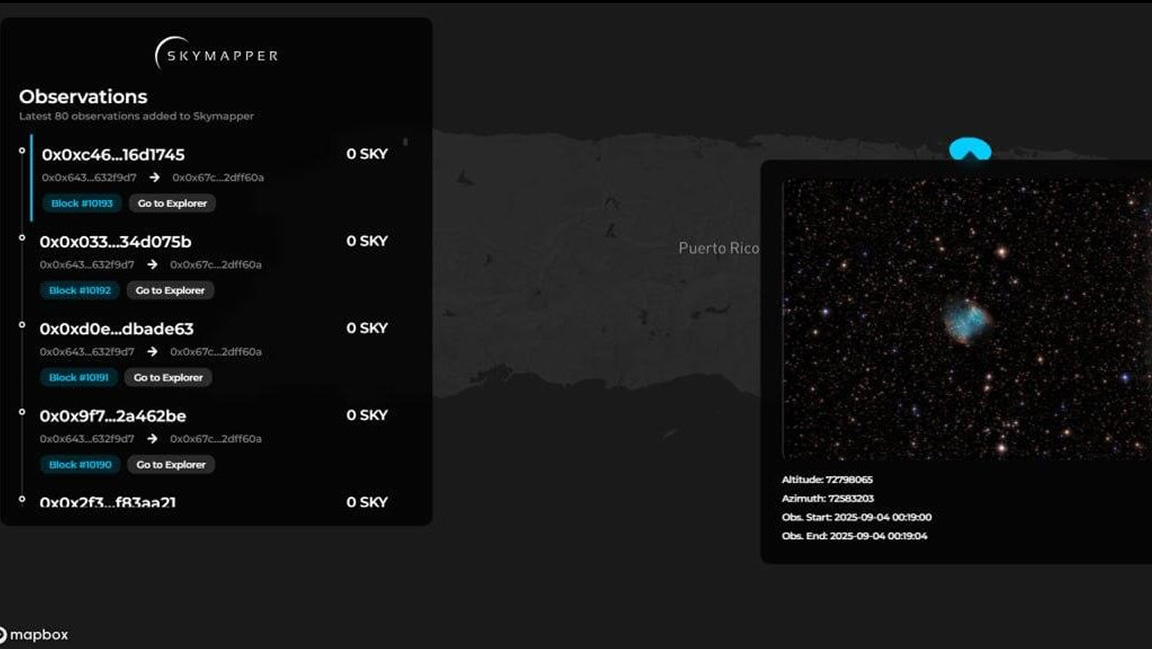
SkyMapper, a pioneering force in decentralized astronomy, is expanding its reach with a new observation node in Puerto Rico. This latest addition, spearheaded by co-founder Stefaan Vervaet, further strengthens SkyMapper's worldwide network of citizen-operated telescopes, which are changing how we gather real-time astronomy data. All data collected is verified on the blockchain, ensuring its integrity before it is made available to researchers and space agencies around the world. The goal is simple: to increase decentralized access to celestial observations through Web3 technology.
The new node is strategically positioned to fill a critical gap in global observation coverage for the Caribbean. Puerto Rico's unique location and rich astronomical heritage make it an ideal hub for this new installation. Situated at a latitude that allows it to monitor both northern and southern celestial hemispheres, the node offers a unique view of the busy orbital trajectories that pass through the Caribbean. Additionally, favorable atmospheric conditions and the expertise of local research teams accelerate the tracking of faint objects, enabling the monitoring of satellites, space debris, and potential asteroid threats.

This expansion solidifies SkyMapper's role as a crucial partner for the growing commercial space industry, where real-time situational awareness is essential for mission success. With launch costs decreasing and orbital congestion increasing, continuous sky monitoring is no longer a luxury—it's a necessity for space traffic management and mission planning. SkyMapper's dedication to creating a continuous, verifiable, and open future for astronomy is further demonstrated by its ongoing collaboration with the SETI Institute and local researchers.
The Puerto Rico node significantly boosts SkyMapper's capabilities by expanding observational coverage of key orbital insertion points and providing comprehensive monitoring of the Caribbean space corridor. This gives launch providers and satellite operators critical data for trajectory planning, debris avoidance, and orbital slot coordination, ultimately enabling safer and more cost-effective space operations. The benefits of this new installation will ripple out, supporting both scientific research and commercial ventures in the region and worldwide.

SZ3 2025